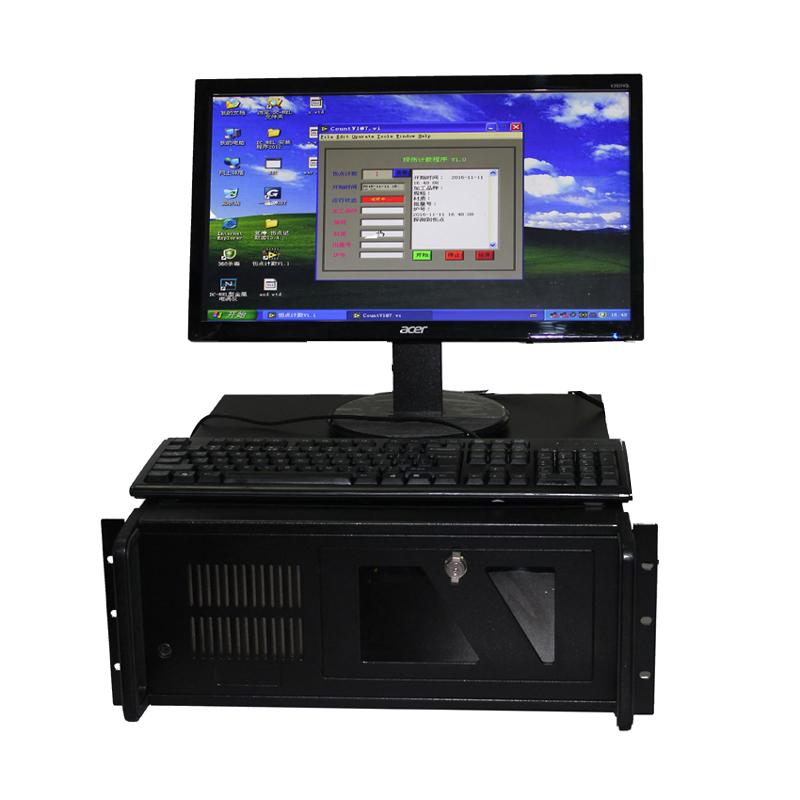
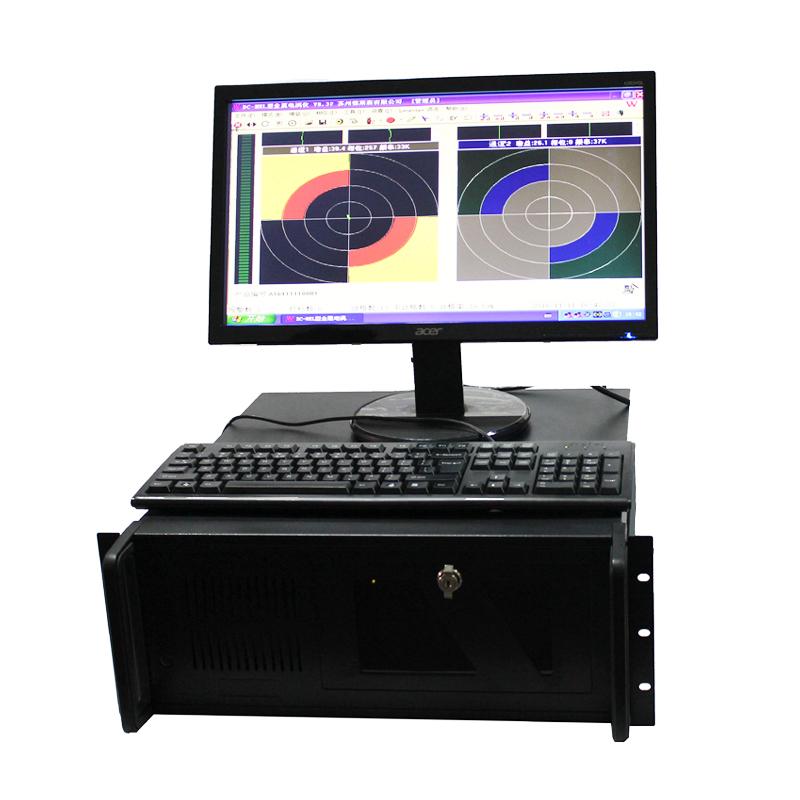
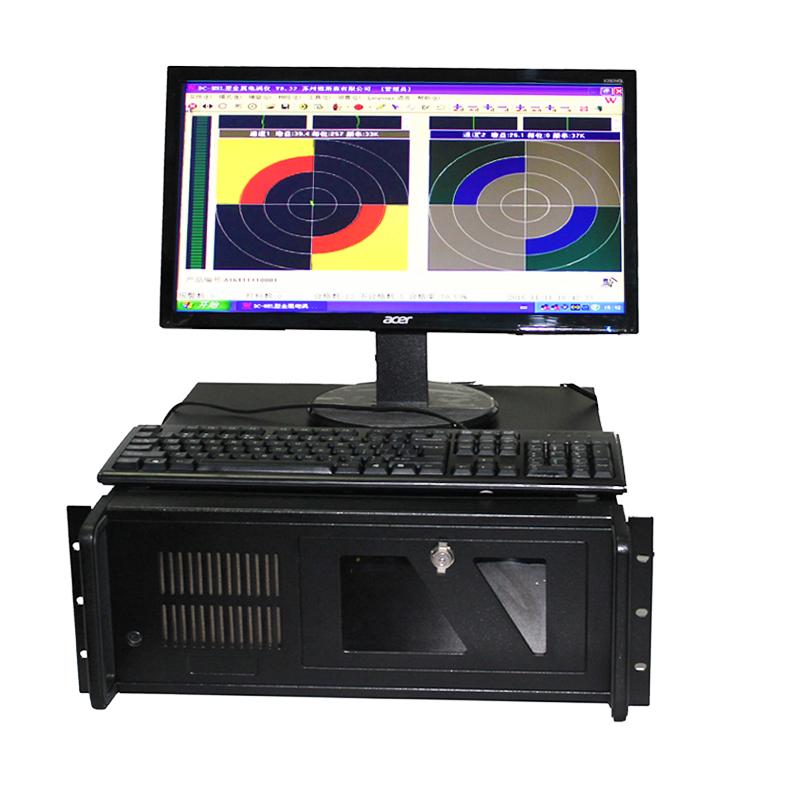
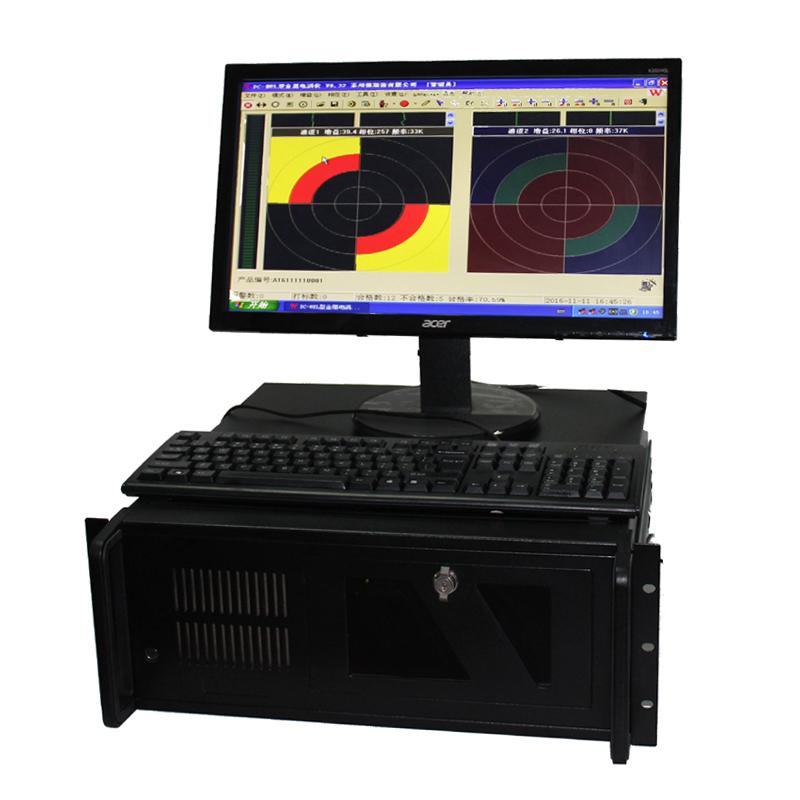

WENTAI FET-99S Intelligent digital eddy current Flaw Detector with installation training
SE FET-99S

WenTai FET-99S Eddy current Flaw DetectorSPEC
WenTai FET-99S Eddy current Flaw DetectorDetails
WenTai FET-99S Eddy current Flaw DetectorPacking list

- SKU
- NB016258
- Frequency range
- 64Hz~2MHz
- Gain range
- 0-48Db, step distance is 0.5db
- phase
- 0-360 degrees, 1 degree step (automatic phase, amplitude analysis function)
- Automatic zero correction system
- Zero correction interval can be set
- Alarm function
- Different styles of alarm area settings can be applied to various modes
- gain ratio
- 0.1~10.0
- Probe adaptation
- Adapt to various probes: such as external pass-through, swirl/spin, etc
- Detection speed
- 1m/min~360m/min
- Display mode
- Display modes: Impedance, Time Base
- Display mode
- Solid line, blanking
- blanking display coefficient
- 1~100
- Display
- liquid crystal display
- Standby power consumption
- < 10W
- Operating temperature
- -15~55℃
- Storage temperature
- -20~60℃
- Relative Humidity
- Not more than 85%
- Operating Voltage
- AC220±10V

Introduction
FET-99S intelligent digital eddy current flaw Detector is suitable for on-line and off-line flaw detection of aluminum tubes, aluminum rods, copper wires, aluminum wires, stainless steel wires and steel wires, and can be used for automatic flaw detection of other mechanical parts. The instrument adopts the latest digital electronic technology, eddy current technology and microcomputer technology, which is not only easy to debug and operate, but also has reliable, stable and sensitive flaw detection performance.
FET-99S has a relatively independent test channel, which can drive different types of detection probes, or combined probes composed of absolute and differential coils. The detection channel simultaneously collects data and is used to detect metal pipes, wires, and rods. Longitudinal cracks and transverse defects (such as splines) that occur during production. When used for on-line detection of wire rods, FET-99S has high sensitivity to axial defects such as dark gaps, open cracks, and pores.
The FET-99S flaw Detector has a test frequency range of 64 Hz to 2 MHz, which can adapt to the testing requirements of various metal wires, and because it adopts a fully digital design, it can establish multiple standard testing procedures or expert systems in the instrument, which is convenient for users Called when the product specification is changed.
The FET-99S can be connected with a through-type probe with a very low coupling gap requirement, and can also be connected with a combined plane probe or saddle-type probe that is only the size of a cigarette box.
Functional technical characteristics
1. Single station and single channel
2. Gain: 0-48db, step distance is 0.5db, frequency range: 64Hz-2MHz34,
3. Phase: 0-360 degrees, step distance is 1 degree
4. Independent optional frequency
5. Different styles of mode settings
6. Automatic phase and amplitude analysis function
7. Automatic zero-calibration system: the zero-calibration interval can be set
8. Different styles of alarm area settings can be applied to various modes
9. Gain ratio (Y/X): 0.1-10
10. Automatic screen clearing/tracking impedance display
11. It has the functions of detection signal playback, access, etc.
12. Fast analog/digital electronic automatic balance and dynamic tracking filter
13. The operation interface is simple and intelligent, easy to operate
14. Adapt to various probes: external pass-through
15. It is suitable for off-line quality inspection of metal pipe and rod production plants
16. Quick Numbers
17. Unequal amplitude and asymmetric phase alarm area setting
18. Multiple display methods: impedance, time base
19. Digital filtering
20. Sound and light alarm output
21. Automatic balance time
22. Internal and external clock selection
23. It can store a large number of various testing programs and testing data
24. Eddy current signal playback expansion function
25. Automatically record and display defects
26. Display mode: solid line, blanking
27. Blanking display coefficient: 1~100
28. Cartesian coordinate system and polar coordinate system background selection
29. Automatic calendar, time display
30. Liquid crystal display
31. Power supply: 220V (-20% ~ +20%)
32. Analog electronic balance
33. Measure the amplitude, phase and digital value of defects
Schematic diagram of detecting no defects Clutter signal (below) | Schematic diagram of detecting defects Injury signal (below) |
 |  |
Process description
1. Put the product on the rotating tooling;
2. The probe is attached to the surface of the workpiece, and the product moves forward with the rotating tooling image, and the probe detects the scanned product surface;
3. Automatic alarm when there is a defect;
4. No alarm when there is no defect