
TQC LD8100 Low Voltage pinholing Detector 9V/90V
 LD8100

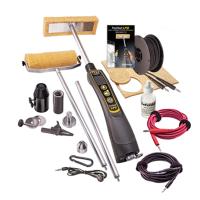
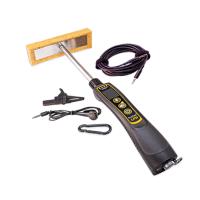
TQC sheen LD8100 Pinholing DetectorSPEC
TQC sheen LD8100 Pinholing DetectorDetails
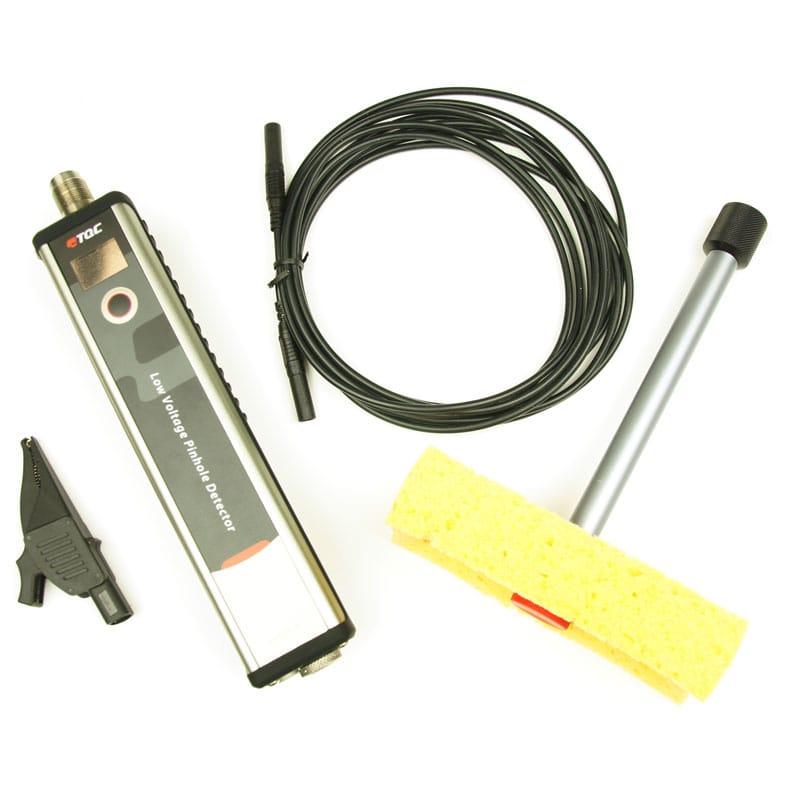
TQC sheen LD8100 Pinholing DetectorPacking list

- SKU
- NB022008
- detection Voltage
- 9V/90V
- Voltage Accuracy
- 9V:±2%;90V:±5%
- Sensitivity
- 100kΩ
- Thickness range
- 0~500μm
- Headphone Connector type
- 3.5Mm interface
- Headphone output power
- Maximum 150 mW
- Headphone Output Impedance
- Approx. 75Ω
- Host size
- 190*40*45mm
- Instrument Weight
- 460G; with sponge 600g
- Display
- Graphic color display, 1 inch, 96 x 64 pixels
- Measurement speed
- continuous
- Environmental temperature
- -10~50℃
- Environmental humidity
- 0~85%RH
- Operating Time
- 130h
- meet the standard
- ISO8289, ISO 14654, ASTM5162, NACE RP0188, NACE SP0188, ASTM G62, BS 7793-2, ASTM D 5162-A, JIS K 6766, TM0384
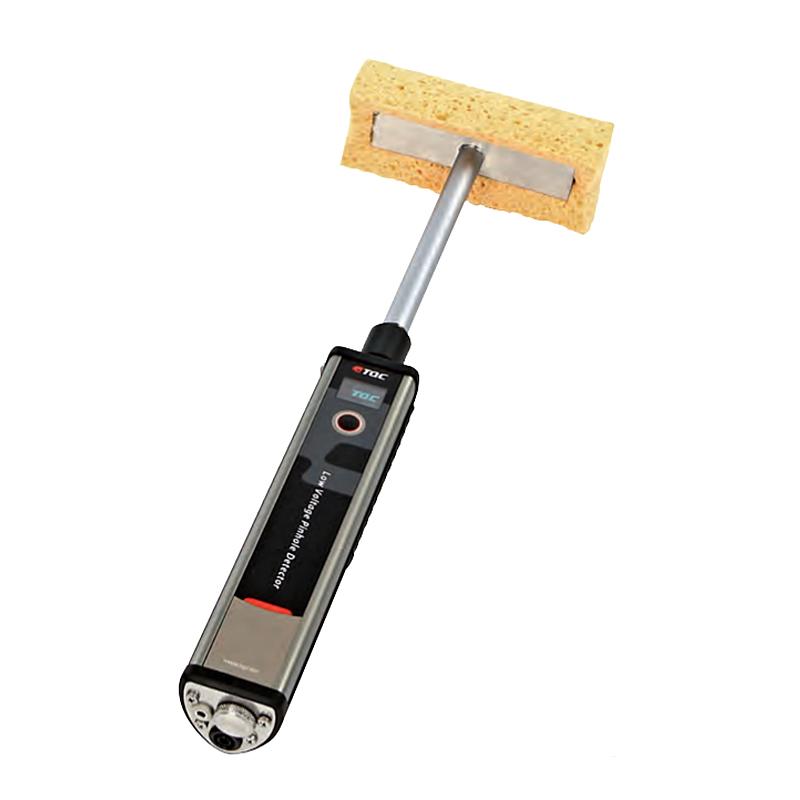
The TQC Low Pressure Pinhole Detector is used to evaluate defects for different coating types applied to metal substrates using wet sponge technology.
The TQC Low Pressure Pinhole Detector is available in two models. The base model is available in 9V and 90V modes. The premium model also has 24V and 67.5V modes. Both models are controlled by a microprocessor and are equipped with a color display, automatic self-diagnostics function, ground fault indication, pinhole counter, acoustic, visual and vibration indicators.
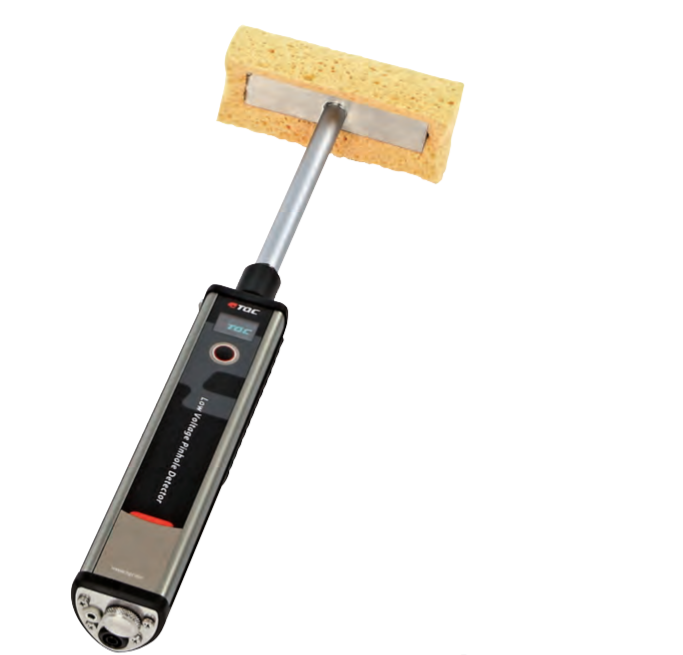
peculiarity
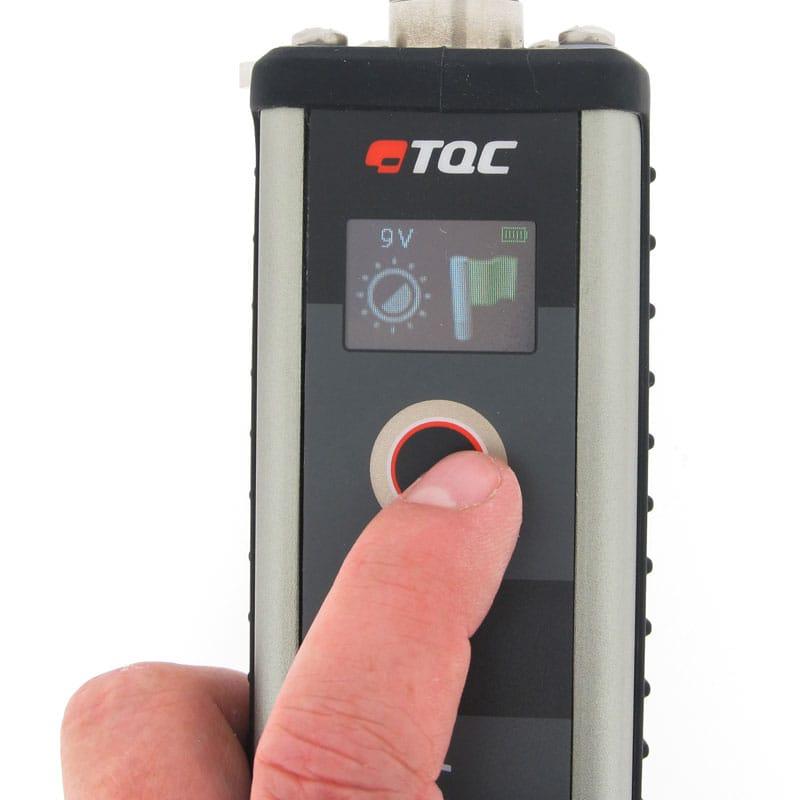
• Color display with battery indicator and menu-based user interface
• Intuitive one-touch control
• Visual, auditory and tactile feedback*
• Return to cable connection detection*
• Smart power saving function (screen dimming, standby, auto power off)
• Pinhole counter detected
• Automatic self-diagnosis function
*Depending on the model, different models have different configurations
apply
Coating irregularities can be caused by many different reasons. Surface contamination or unsuitable climatic conditions, leaks or entrained dust or bubbles prior to construction can cause pinhole problems.
Outdoor or underground coating applications that may have varying degrees of fluid exposure may be sensitive, including areas such as the lining of tanks and tubes. Pinholes in these systems will inevitably lead to premature coating failure, so it is important to inspect them at an early stage.
The correct Voltage depends on the thickness of the coating; 9V, coating up to 300μm; Coatings up to 400μm67.5V; Coating up to 500μm90V.
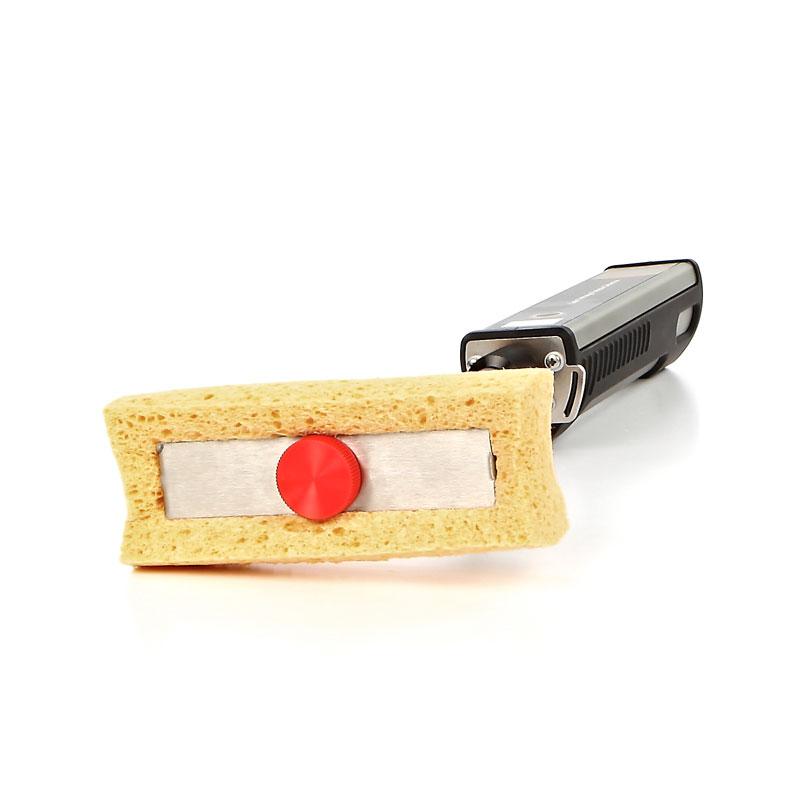
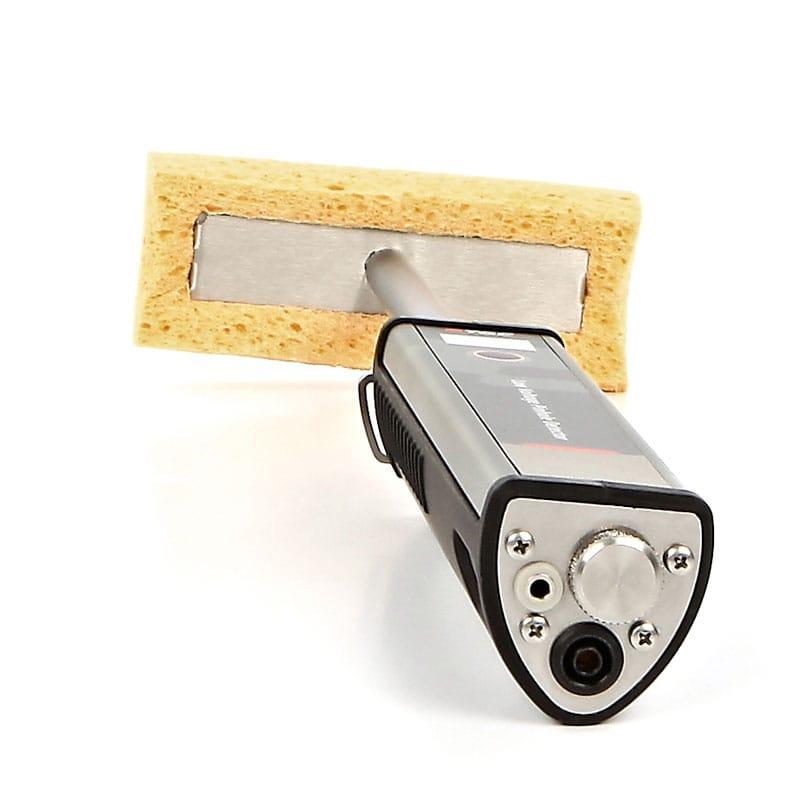
The TQC Low Voltage Pinhole Detector consists of a battery-powered instrument and ground leads, as well as wet sponge electrodes. The ground leads are connected to the bare substrate. The movement of the moistened sponge over the test area allows moisture to enter the pinhole due to capillary absorption, thus coming into contact with the base substrate that is the ground. Causes audible, visual, or tactile/vibrational alarms to indicate pinholes. The number of pinholes detected is stored in memory and remains usable even if the battery is replaced.
Operating the TQC Low Pressure Pinhole Detector is very simple, the interface is menu-based, and intuitive operation is at the touch of a button.
Trial criteria
ISO 8289-A, ISO 14654:1999, BS 7793-2:1996, ASTM D 5162-A, JIS K 6766:2008, TM0384-2002