
ANGNI AM110W-T Laboratory Electric Stirrer
 AM110W-T

AN AM110W-T Laboratory Electric StirrerSPEC
AN AM110W-T Laboratory Electric StirrerDetails
AN AM110W-T Laboratory Electric StirrerPacking list
- SKU
- NB022917
- Rated Voltage
- AC100~240V
- Rated Frequency
- 50/60Hz
- Input Power
- 162W
- output power
- 110W
- drive type
- Brushless DC Motor
- Max Torque
- 13.1N.cm
- Max Torque
- 39.0N.cm
- Operating Mode
- S1 (continuous)
- Rotation speed display
- TFT
- Speed range
- 30~2000rpm
- Speed regulation mode
- stepless speed regulation
- Timer
- 1~6000min
- Impeller fixing method
- Collet
- Rotary collet clamping range
- Φ2~10mm
- Stirringrod penetration diameter
- Φ10mm
- Impeller type
- Three Blade Spiral Impeller
- Processing Capacity
- 20L
- maximum viscosity
- 100000mPa·s
- Environmental temperature
- ≤40℃
- Allowable Relative Humidity
- ≤80%
- Dimensions of the whole machine
- 215*310*600mm
- Machine Weight
- 7.6kg
- Protection level
- IP40
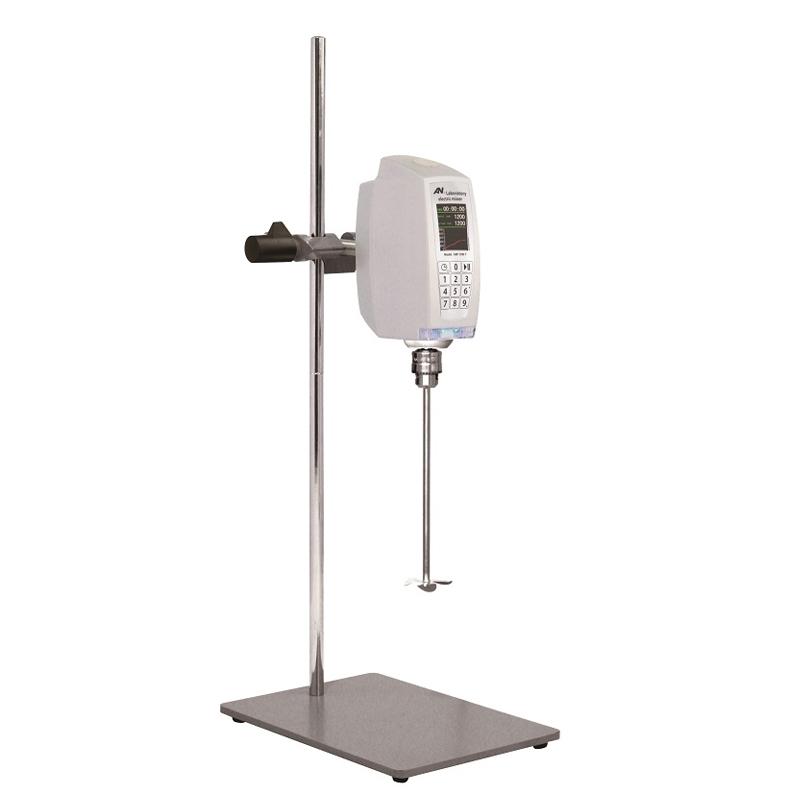
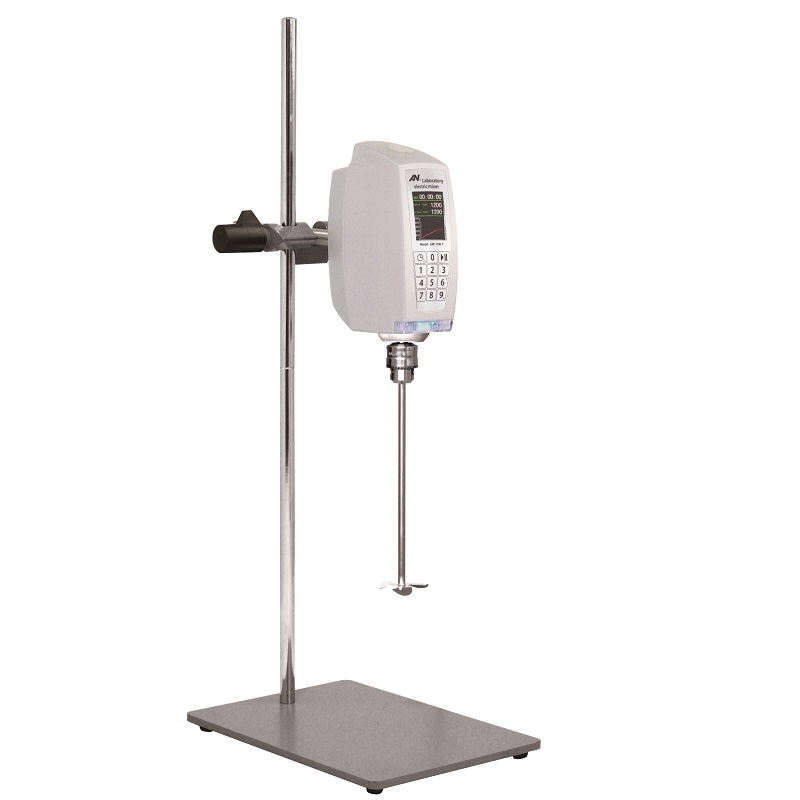
The electronic constant speed mixer is driven by a brushless DC motor, which is suitable for mixing and mixing low-to-medium and high-viscosity liquids in the laboratory. The structure of the machine is reasonable and compact, ultra-low noise, maintenance-free, the stirring speed is controlled by the microprocessor, which can timely and effectively compensate for the speed change caused by load changes and power supply Voltage fluctuations, and the constant speed is reliable. Built-in automatic overload protection device to ensure the safety of long-term and high-load continuous operation of the experiment; knob control of running state makes the experimental operation easier, stepless adjustment of stirring speed to meet the need to correct the stirring speed at any time during the experiment; digital display setting and actual output stirring speed to ensure the intuitive collection of experimental data; operation Timer Control to ensure that the temporality of the experiment is effective and controllable. Stable stirring speed, competent for the mixing of high-viscosity media and slurry.
Experimental principle
Stirring and blending are two of the oldest basic human behaviors, whose origins can be traced back to early food preparation. When making soup, you need a spoon to stir in the jar. The process of the spoon acts as a mixing tool, while the hand that makes a circular motion acts as a mixing drive. In order to achieve the desired results, even such a primitive mixing process requires practical experience.
Mixing is the process of combining several materials of different origin under the action of external energy. It is difficult to estimate the form of the mixture due to the differences in the aggregation state, composition, chemical and physical properties of the substances. Parameters such as density or density and viscosity of powder substances are of great importance in the mixing process. These parameters determine the amount of energy required, the possible compatibility, the degree of dispersion, and the stability of the mix.
Stirring can be applied to homogenization of compatible liquids, as well as to dissolve and mix solid particles in liquids. Adjusting the balance of temperature or concentration will make the mixing process more efficient. In addition, increasing the stirring rate of the liquid can speed up the dissolution process and will increase the speed of the chemical reaction. Mixing is widely used in schools and universities, as well as in biotechnology, chemical, food and other industries. Where there is chemical production and processing, there will be mixing.
When the movement of the liquid or the low shear requirements can be achieved by a specific application, good mixing becomes a convenient mixing process.