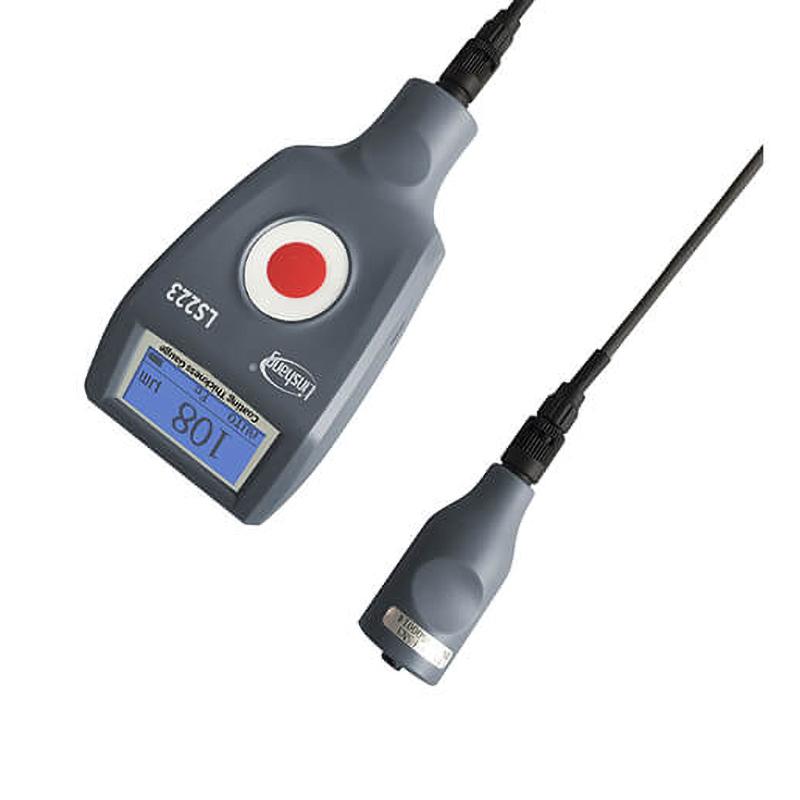
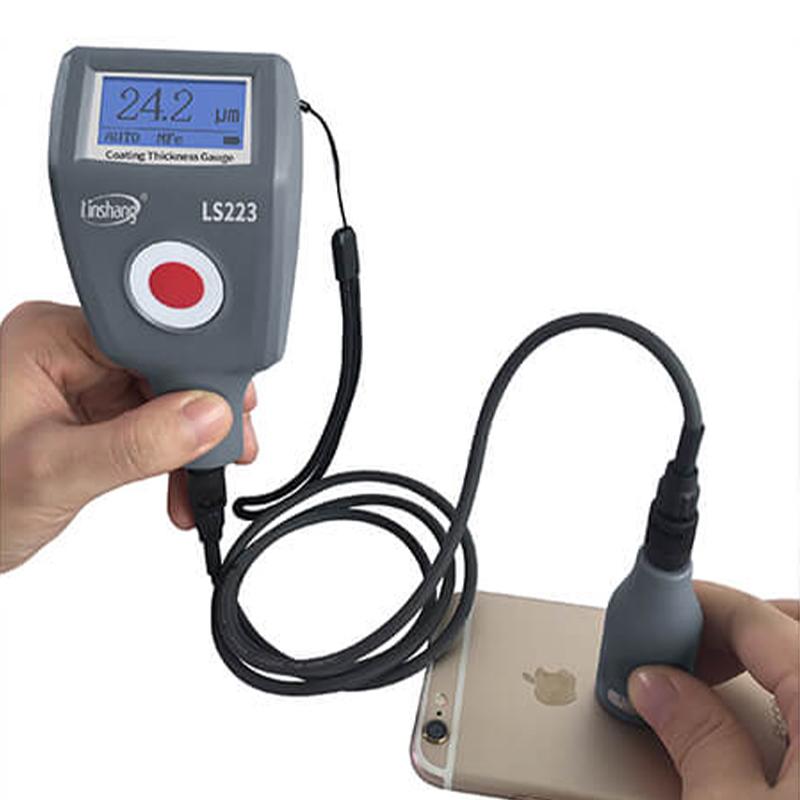

LINSHANG LS223 + F5N3 Coating Thickness Gauge coating 3mm/5mm
 LS223+F5N3

LinShang LS223+F5N3 Coating Thickness GaugeSPEC
LinShang LS223+F5N3 Coating Thickness GaugeDetails
LinShang LS223+F5N3 Coating Thickness GaugePacking list

- SKU
- NB029833
- Measurement principle
- Hall effect/eddy Current
- Measurement range
- Fe:0.0~5000μm;NFe:0.0~3000μm
- margin of error
- ±3~5%
- Resolution
- 0.1μm|1μm|0.01mm
- Minimum measurement surface
- Φ25mm
- Minimum radius of curvature
- Convex: 5mm; Concave: 25mm
- thinnest substrate
- 0.2mm(F);0.05mm(N)
- probe
- Line probe
- Probe size
- 22*26*55mm
- Probe material
- ruby
- Calibrated mode
- No need to calibrate, just zero
- Measurement mode
- "Fe"、"NFe"、"Fe/NFe"
- Unit display
- μm/mil
- Power Supply
- 2 1.5V AA alkaline batteries
- Standards
- GB/T4956-2003、GB/T4957-2003、DIN EN ISO 2808、JJG-818-2005
- system language
- Chinese
- Display screen
- 128x
- Operating temperature
- 0~50℃
- Print function
- none
- Machine Weight
- 160g
- Machine size
- 126*66*35mm
- Storage temperature
- -20~60℃
Introduction
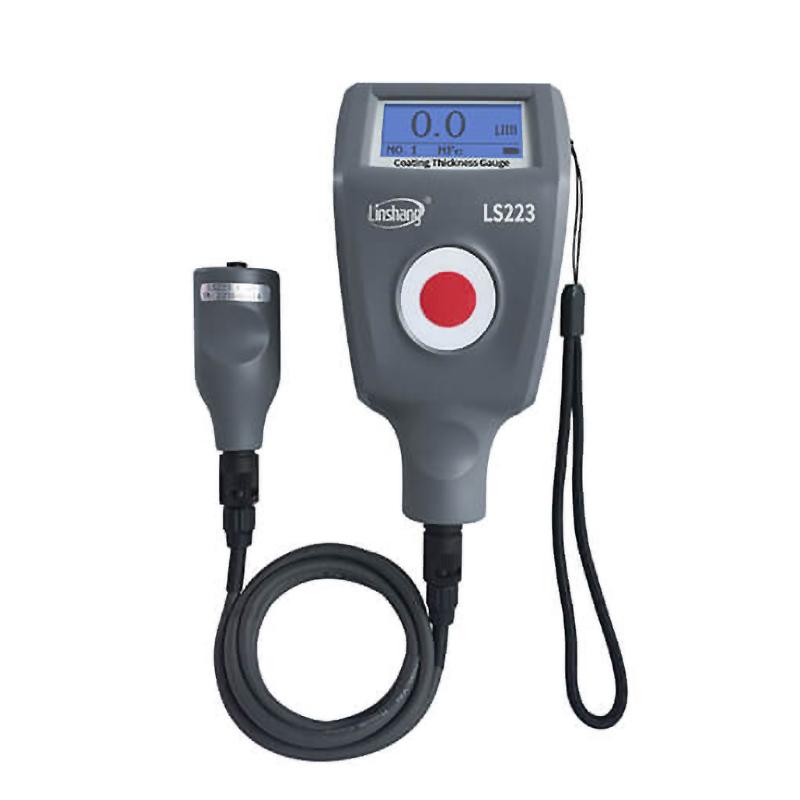
The LS223 coating Thickness Gauge can be used not only for coating ferromagnetic metal substrates such as steelMeasurement of non-magnetic coatings such as materials, varnishes, enamels, chromium, galvanization, etc., can also be used for copper, aluminum, and pressingNon-conductive coatings, anodized layers, ceramics and other non-magnetic metal substrates such as cast zinc and brassMeasurement of electric coatings. The instrument automatically recognizes the type of measurement substrate and automatically switches the measurement mode.
It is widely used in manufacturing, metal processing industry, chemical industry, commodity inspection and other fields.
depend onAccording to the standard
GB/T4956-2003 Thickness measurement of non-magnetic overlay on magnetic substrate - magnetic method
GB/T4957-2003 Thickness measurement of non-conductive overlay on metal of non-magnetic matrix-
Eddy current method
DIN ENISO2808 Determination of paint film thickness for coatings and varnishes
JJG-818-2005 V. R. of Magnetic and Eddy-current Coverage Thickness Measuring Instrument
Features
1. No need to calibrate, just zero adjustment.
2. Separate buttons, the operation is very simple.
3. The measurement is fast, and a measurement can be completed in 0.5 seconds.
4. Ultra-large range test, the thickest can be measured up to 5mm.
5. The wear resistance of the ruby probe ensures the long-term and effective use of the instrument.
6. Iron and aluminum dual-purpose probe, automatic identification of the measurement substrate, can be quickly and automatically converted.
7. "Fe", "NFe", "Fe/NFe" three measurement modes can be set.
8. It can measure the thickness of the non-magnetic overlay on magnetic metal substrates such as steel, and the thickness of non-conductive overlays on non-magnetic metal substrates such as copper and aluminum.
9. Using professional digital probe technology, digital signal processing is completed directly on the probe, the probe is not easy to be disturbed and provides excellent test accuracy. Even temperature changes do not affect the measurement, and the readings remain stable to ensure very good repeatability throughout the measurement.
- 1GB/T 44757-2024《Anodizing coating on titanium and titanium alloys》
- 2QJ 990.3A-2011《Inspection methods of coating.Part 3:Measurement of coating thickness》
- 3GB/T 13448-2019《Test methods for prepainted steel sheet and strip》
- 4GB/T 1727-2021《General methods for preparation of coating films》
- 5GB/T 12967.1-2020《Test methods for anodic oxidation coatings and organic polymer coatings of aluminium and aluminium alloys―Part 1: Measurement of abrasion resistance》
- 6HG/T 20720-2020《Construction and acceptance specification of waterborne anti-corrosion coatings for steel structures in industrial buildings》
- 7SY/T 0315-2013《Technological specification of external fusion bonded epoxy coating for steel pipeline》
- 8GB/T 13448-2006《Test methods for Prepainted Steel Sheet》
- 9QB/T 2183-1995《Bicycle electro-coating technical conditions》
- 10JB/T 7217-2008《General technical conditions for painting of separation machinery》