
YINUO YN-HDY04 Automatic Film thickness meter 0~5mm 0.001mm
SE YN-HDY04



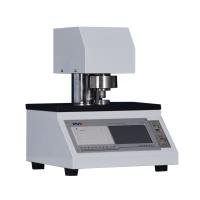
YiNuo YN-HDY04 Film thickness TesterSPEC
YiNuo YN-HDY04 Film thickness TesterDetails
YiNuo YN-HDY04 Film thickness TesterPacking list

- SKU
- NB033122
- Measurement range
- 0~5mm
- Resolution
- 0.001mm
- Indication of variability
- ≤ 0.002mm or ≤ 0.5%
- Measurement plane parallelism
- ≤0.001mm
- Measurement speed
- 1mm/s~60mm/s (adjustable)
- Regulator time
- Adjustable from 0.1 to 5seconds
- Number of continuous measurements
- 1~ 99 times optional
- Contact area
- 200 +/- 5mm ², Chassis boss diameter (16 +/- 0.15) mm
- Contact Pressure
- 100 ± 10kPa
- Probe descent speed
- 0.5 ~ 10mm / s, TAPPI (1.0 ± 0.3mm / s) ()
- Display
- 7.0In touch screen control.
- Print function
- Built-in silent high-speed thermal printer with its own printing function
- Operating Environment
- Temperature 10~35 ℃, Relative Humidity does not exceed 85%
- Dimensions
- 330*350*500mm
- Weight
- 25kg

use
YN-HDY04 Microcomputer Paper Thickness Tester is a full-automatic high-precision paper thickness Tester developed by our company according to national standards. It adopts touch screen control system, full-automatic test mode, and completes the test with one key. It can be operated by a single machine or set up. Set the number of continuous tests to reduce the error. It is used to detect the single-layer thickness, layer thickness, and banner thickness difference of paper within 5mm. It is professionally suitable for various materials such as plastic film, sheet, diaphragm, paper, foil, and silicon wafer within the measuring range. Accurate measurement of thickness.
Test principle: Under the specified static load, use a Thickness Gauge that meets the accuracy requirements to measure the thickness of a single sheet or a stack of sheets according to the test requirements, and express the results in terms of single-layer thickness or laminated thickness. Or the quantitative and single-layer thickness or laminated thickness of the cardboard, and calculate the single-layer tightness or laminated tightness respectively.
Executive standard
GB/T6672, GB/T 451.3, QB/T 1055, ISO 534, GB/T 6547, GB/T 24328.2
Application
| basic application | film, sheet | Thickness measurement of various plastic films, sheets, diaphragms, etc. |
| Paper | Thickness measurement of various paper, cardboard, composite cardboard, etc. | |
| extended application | metal sheet, silicon chip | Thickness measurement of silicon wafers, foils, various metal sheets, etc. |
| corrugated cardboard | Thickness determination of corrugated cardboard | |
| textile material | Thickness determination of various textile materials such as woven fabrics, knitted fabrics, coated fabrics, etc. | |
| Non-woven | Thickness measurement of various nonwoven fabrics such as diapers, sanitary napkins, medical masks, etc. | |
| other materials | Thickness determination of solid electrical insulating materials, adhesive tapes, geosynthetics, rubber, etc. |
Why choose a microcomputer type thickness measuring instrument?
In terms of testing principles, commonly used Thickness Gauges include laser Thickness Gauges, capacitive Thickness Gauges, eddy current Thickness Gauges, and mechanical Testers. Non-contact thickness measuring equipment has a certain selectivity for test samples. For example, laser Thickness Gauges can achieve high measurement accuracy in suitable fields, but it will be difficult to detect samples with different gloss on the surface. There is a large test error, and the Thickness Gauge of this method also has a relatively strong selectivity for whether the sample is transparent. Capacitance or eddy current Thickness Gauges have large errors in the testing of metals and non-metals. In short, non-contact thickness measuring equipment has its own testing field, but users cannot buy multiple types of thickness measuring equipment to test various samples with different materials.
The mechanical Thickness Gauge is a kind of contact thickness measurement equipment, which mostly uses high-precision sensors, because its test is only related to small displacements, so it has no selectivity for the sample. The test accuracy of the mechanical Thickness Gauge mainly depends on the accuracy of the displacement sensor. The ambient temperature and wind speed will affect the accuracy of the sensor, so it needs to be used in a laboratory environment.
Yinuo Instrument’s microcomputer Thickness Gauge adopts mechanical contact measurement, strictly in accordance with the requirements of the standard, and innovates through continuous innovation, research and development and technology accumulation. It uses high-precision displacement sensors, scientific structural layout and professional control technology. Test stability, repeatability and precision.
- 1Paper and Cardboard Thickness Gauge
- 2What are the paper physical properties testing instruments? How to maintain