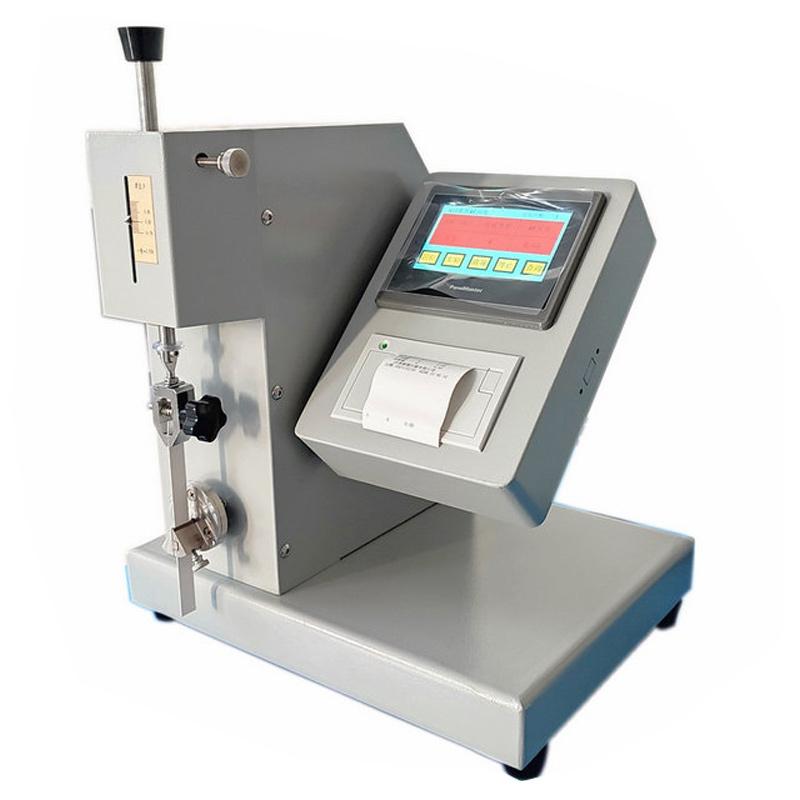
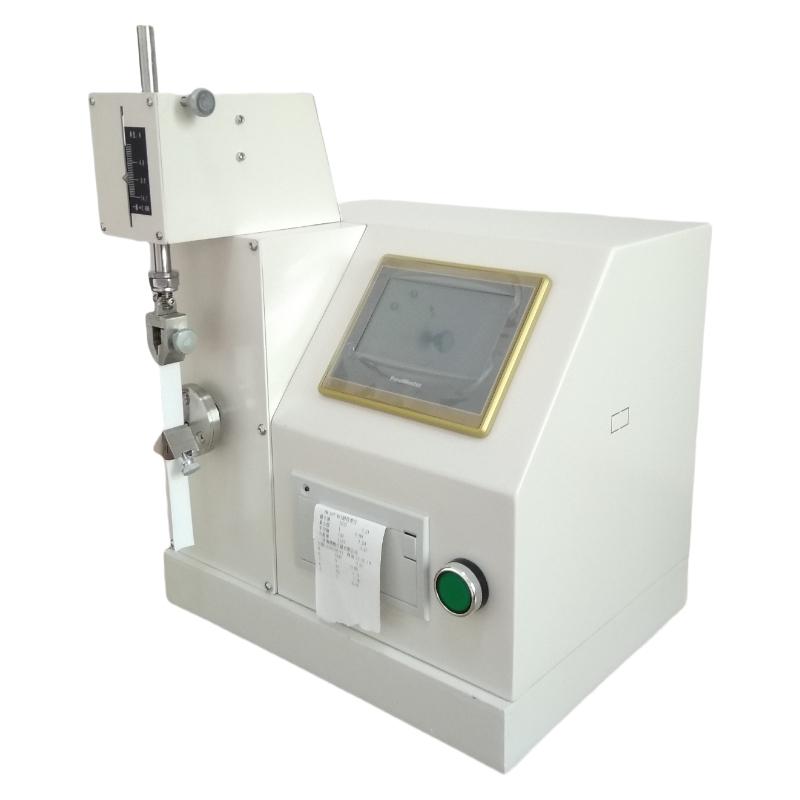
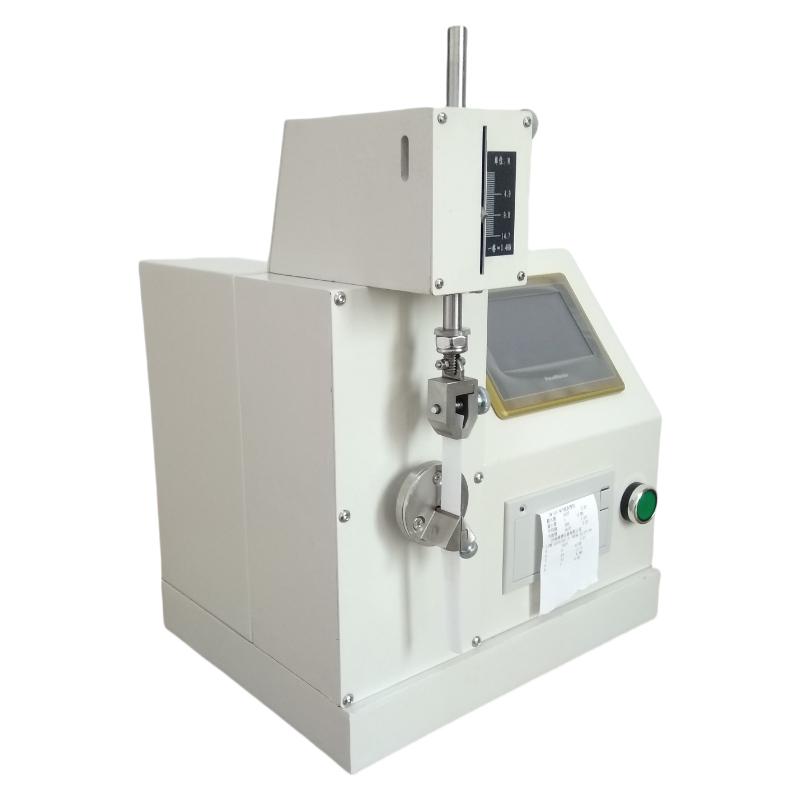
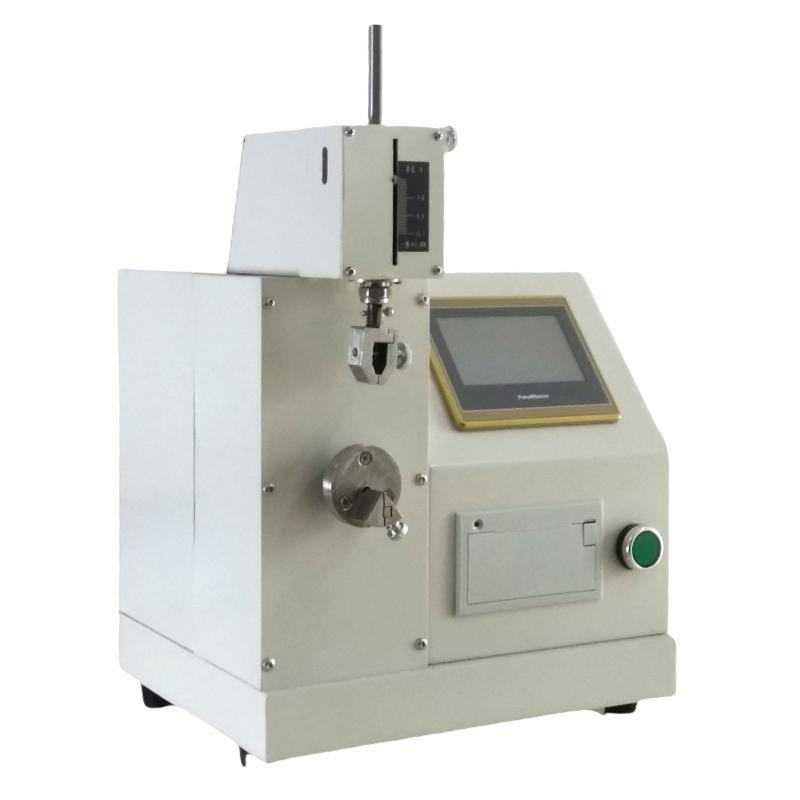

JINGWEN JW107C MIT Paper Folding Endurance Tester
SE JW107C

-
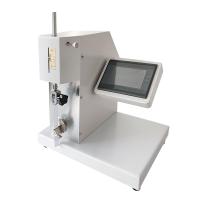 JINGWEN JW107C2 paper MIT folding resistance Tester$ 1360.00SE
 -
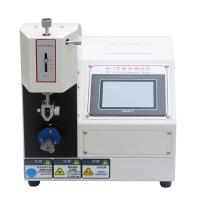 CHINA NBC-5637 MIT Paper Folding Endurance Tester$ 1340.00SE
 -
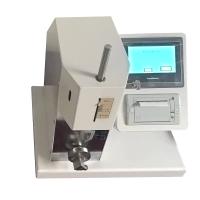 Taichang TC-NZ135A Touch Screen MIT Folding Tester 0.25mm$ 1497.00SE
 -
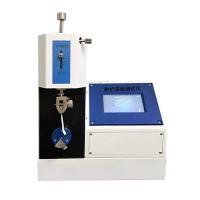 Essence LD-NZ-02 Folding Strength Tester, Folding Strength Tester, Touch Screen$ 1597.00SE
 -
 CHINA ZY-NZ1 folding resistance instrument$ 1606.00SE





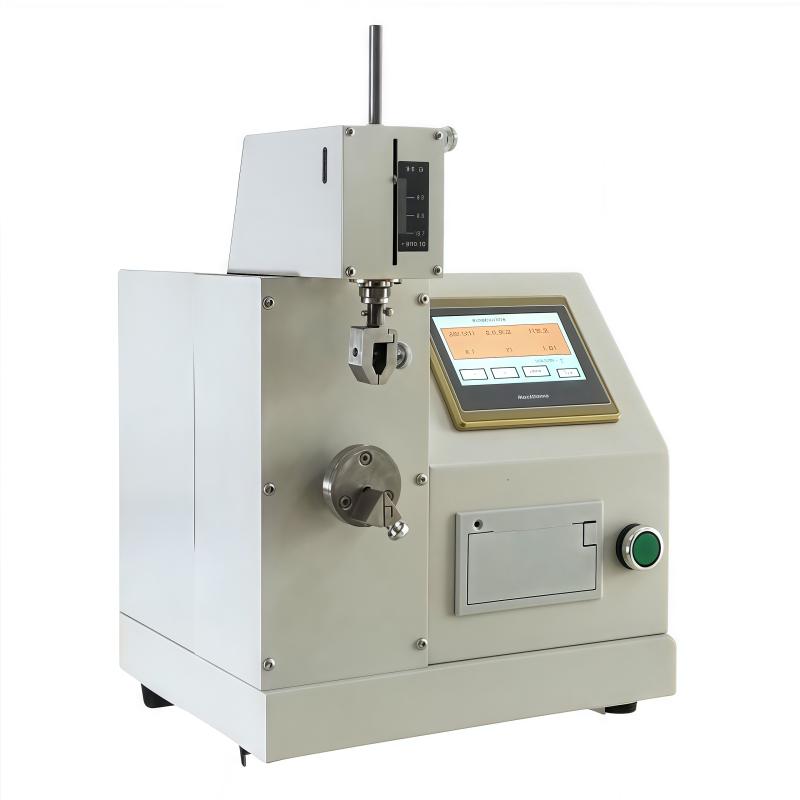
jingwen JW107C MIT Folding Endurance TesterSPEC
jingwen JW107C MIT Folding Endurance TesterDetails
jingwen JW107C MIT Folding Endurance TesterPacking list
- SKU
- NB033184
- Measurement Range
- 1~ 99999 times (the range can be increased as needed)
- folding angle
- 135°±2°
- folding speed
- 175±2cpm
- Tension adjustment range
- 4.9N~14.7N
- Folding mouth gap distance
- 0.25Mm, 0.50mm, 0.75mm, 1.00mm four optional
- Folding head width
- 19±1mm
- Fold mouth fillet radius
- R0.38mm±0.02mm
- Power Supply
- AC220V±10% 50Hz
- Operating Environment
- Temperature 0~40 ℃, Relative Humidity does not exceed 85%
- Instrument Gross Weight
- ≤ 30kg
- interface
- USB download Data Interface (optional)
product description
MIT folding Tester is a new type of high-precision intelligent Tester that our company researches and develops in accordance with relevant national standards and adopts modern mechanical design concepts and microcomputer processing technology to carefully and rationally design. It uses high-end PLC controllers, touch screens, and sensors. And other supporting components, with reasonable structure and multi-functional design. It has the functions of various parameter testing, conversion, adjustment, display, memory, printing and so on included in the standard.
Features
1. The instrument uses microcomputer control technology, which has a high degree of automation and can simultaneously perform sampling, measurement and control, and display.
2. The measurement is accurate and fast, the operation is simple, and the use is convenient. After the test is completed, it will automatically return to its original position after starting up and completing the experiment.
3. It adopts stepping motor control, precise positioning, automatic measurement, statistics, printing of test results, and has the function of data storage. Each group saves data ten times, and automatically calculates the average value, maximum value, and minimum value. Chinese graphic menu display operation interface, miniature printer, easy to use,
4. The modern design concept of optomechanical integration, compact structure, elegant appearance, stable performance and reliable quality.
technical standard
ISO 5626: Determination of crease resistance of paper
GB/T 2679.5: Determination of folding endurance of paper and cardboard (MIT folding endurance Tester method)
GB/475 Determination of folding endurance of paper and board
QB/T 1049: Paper and cardboard folding Tester
Applications
The folding endurance Tester complies with the above national standards and is suitable for measuring the folding fatigue strength of paper, cardboard and other sheet materials with a thickness of less than 1mm. The instrument adopts photoelectric control technology to make the folding chuck return automatically after each experiment, which is convenient for the next operation. The instrument has powerful data processing functions: it can not only convert the bifold times of a single sample and the corresponding logarithmic value, but also can count the experimental data of multiple samples in the same group.
- 1Why measure the folding resistance of paper and cardboard?
- 2MIT refractometer test method
- 3Folding Tester - paper folding performance test
- 4What are the paper mechanical performance testing instruments? How to maintain
- 5FRANK horizontal refractometer test method
- 6What are the common mechanical performance indicators of paper?
- 7The principle and test method of Schopper folding resistance Tester
- 8What are the factors that affect folding endurance?
- 9Method for determination of bursting resistance and folding resistance of paper
- 10The working principle of the paperboard folding resistance Tester