
YINUO YN-YLD01 Standard Freeness Meter, Canadian Freeness Meter 0~1000csf
SE YN-YLD01


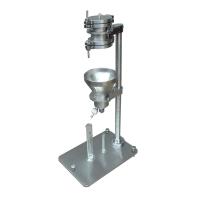
YiNuo YN-YLD01 Canadian Freeness MeterSPEC
YiNuo YN-YLD01 Canadian Freeness MeterDetails
YiNuo YN-YLD01 Canadian Freeness MeterPacking list
- SKU
- NB034026
- Measurement range
- 0~1000CSF
- Analytical Accuracy
- 10CSF
- The Capacity of a round container
- 1000ml
- Volume of conical funnel
- 23.5±0.2ml
- overflow height
- 50.8±0.7mm
- Indoor diameter
- 101.6±0.2mm
- Water filter height
- 127.0±0.2mm
- Valve control
- 4.8±0.2mm
- Screen mesh aperture
- Diameter 0.50mm/97H/cm2
- cone angle
- 29.5°±0.5°
- Sealing method
- Work body sealing + silicone sealing ring structure
- Sealing ring material
- Pure silica gel, acid and alkali resistant.
- Calibration method
- Self-calibrating
- Cylinder material
- 304 #stainless steel
- Test cup material
- 304 #stainless steel
- Chassis flat bottom bracket material
- 304 #stainless steel
- Standard size
- 350*520*1280mm
- Weight
- About 60kg
use
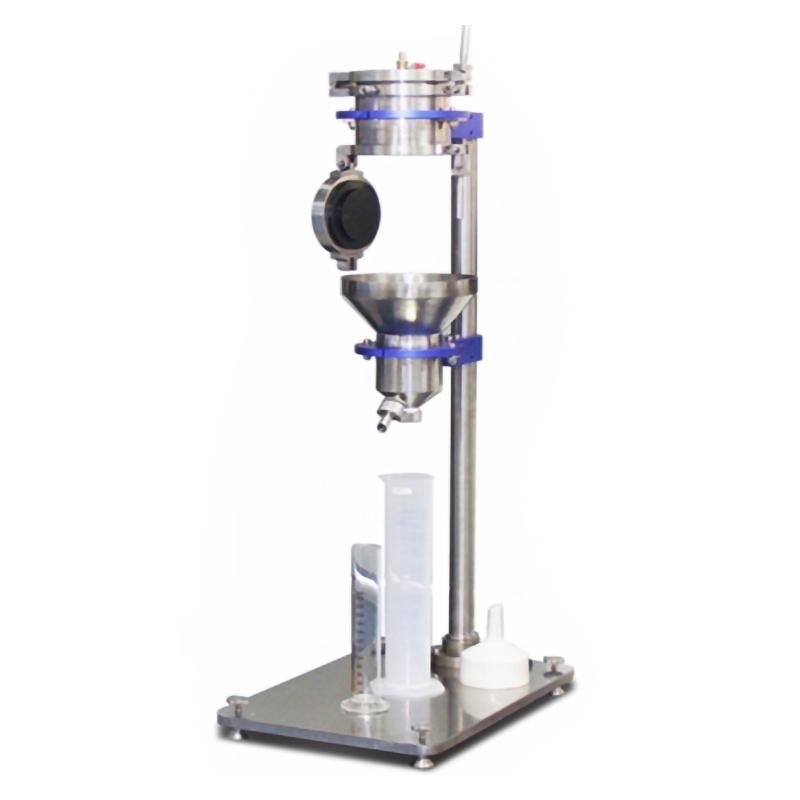
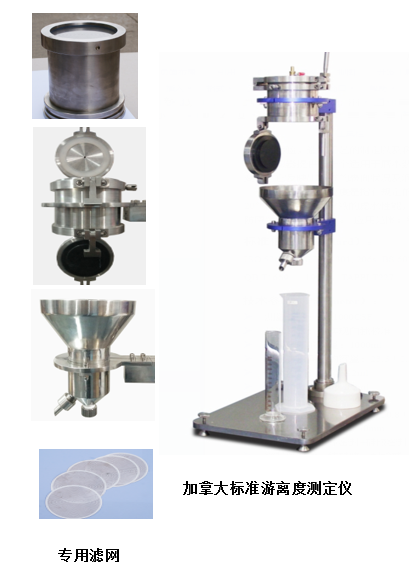
The standard freeness meter is used to measure the water filtration rate of the water suspension of various pulps, and is expressed by the concept of freeness (CSF for short). Drainage rate reflects how well the fiber has been beaten or refined. The standard freeness Tester is widely used in the inspection of the beating process in the papermaking industry, the formulation of the papermaking process, and various papermaking pulping experiments in scientific research institutes. It is an indispensable measuring instrument for the study of pulping and papermaking.
The instrument provides a test value suitable for the production control of groundwood pulp; it is also widely applicable to the change of drainage of various chemical pulps in the process of beating and refining; it reflects the surface condition and swelling of the fiber.
Canadian standard freeness refers to the water filtration performance of 1000mL slurry water suspension with a content of (0.3±0.0005)% and a temperature of 20°C measured by a Canadian freeness Tester under specified conditions. The volume (mL) of water represents the CFS value. The instrument is made of all stainless steel, which is corrosion-resistant and has a long service life.
Application
pulp, composite fiber
Standards
ISO 5267/2, AS/NZ 1301, 206s, BS 6035 part 2, CPPA C1, SCAN C21; QB/T1669-1992, TAPPI T227