
CHINA ZY-SS Vibration Screening Machine Somerville-type screening
SE ZY-SS
ZY-SS

zy ZY-SS Vibration sieve machineSPEC
zy ZY-SS Vibration sieve machineDetails
zy ZY-SS Vibration sieve machinePacking list

- SKU
- NB034098
- Screening area
- 54200m㎡
- 304 stainless steel screen frame size
- 311mm×292mm
- Factory sieve plate sieve seam specifications
- 0.25mm (seam width can be customized)
- Slurry vibration frequency
- 400--3000 times/min, manual adjustment, digital display
- Rubber film drive amplitude
- 3.2±0.1mm
- Size of slurry cylinder (length × width × height)
- 320mm×270mm×300mm
- Motor power
- 750W
- Gear reducer speed
- 200~1000r/min
- Dimensions
- 1100*360*880mm
- Standards
- TAPPI275.
- Water source requirements
- The water flow rate is 8.6 L/min; the water pressure is 1.23 Kg/cm2
Introduction
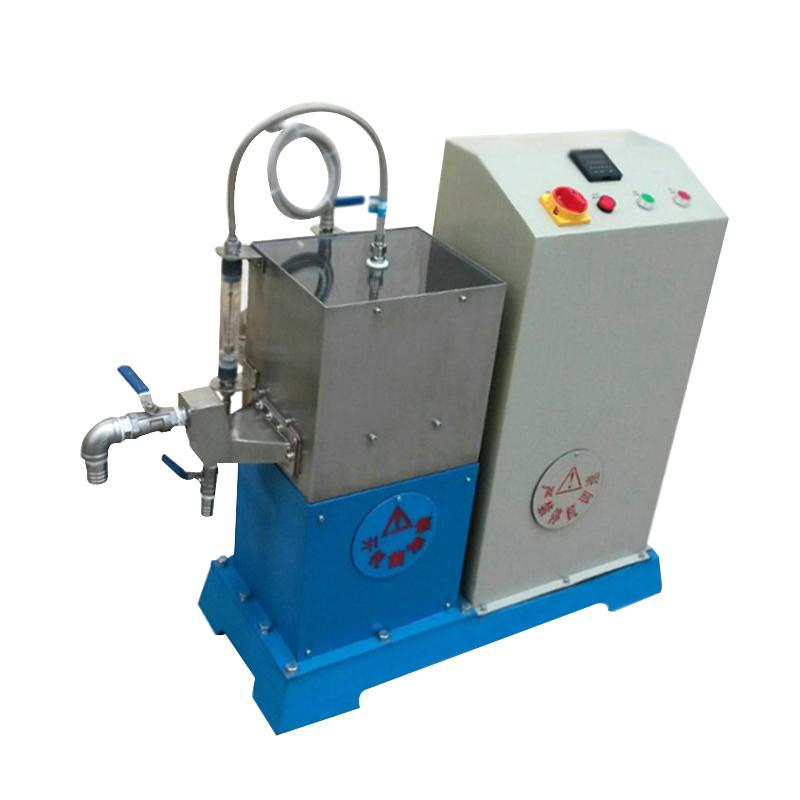
Frequency-modulated vibrating screener (somerville-type screening) is used to screen impurities in pulp and determine the content of impurities such as debris in pulp. It is used in pulp and paper laboratories. Pulp sieving machine can reduce the number of impurities in the pulp suspension that do not meet the process requirements, and obtain clean good pulp. This machine is a flat-plate vibrating pulp screen machine with a size of 270×320, which can be equipped with screen plates with different specifications of gaps. It uses vibrating vacuum suction to screen pulp fibers after beating the pulp. At the same time, the machine can also be used as a flat screen.
The purpose of screening is to separate impurities such as debris in mechanical pulp, and large viscose, plastics, silt, iron filings and flakes in pulp recycled fibers, before inspection and quantification.
The frequency-modulated vibrating pulp sieving machine uses a speed-regulating reducer to drive the cam through the connecting shaft, and vibrates the bottom plate up and down, so that the pulp generates high-frequency vibrations, and the qualified pulp passes through the sieve gap, while the unqualified fibers and slag remain on the sieve plate superior.
Small size, adjustable vibration frequency, easy disassembly of the sieve plate, convenient operation, different frequencies can be selected according to the slurry to achieve a suitable effect, and provide the most reliable experimental data for production.