
LEEB252A Coating Thickness Gauge 0~1250μm
SE leeb252A

-
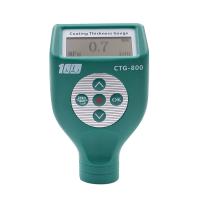 CHINA CTG-800-1500FN Paint Layer Thickness Gauge, Integrated dual-use Standard Type$ 206.00SE
 -
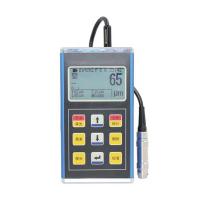 IPRE CT400 magnetic Induction eddy Current Coating Thickness Gauge Measurement range 0~1500μm$ 256.00SE
 -
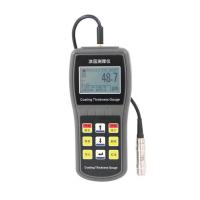 IPRE CT150 Coating Thickness Gauge Measurement range 0~1500μm$ 236.00SE
 -
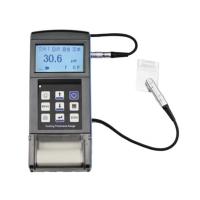 IPRE CT300 paints film thickness Measurement Instrument magnetic Induction/eddy Current dual-use$ 373.00SE




Leeb leeb252A Coating Thickness GaugeSPEC
Leeb leeb252A Coating Thickness GaugeDetails
Leeb leeb252A Coating Thickness GaugePacking list

- SKU
- NB034688
- Probe Type
- F1 and N1
- Measurement principle
- Magnetic induction + eddy current
- Measuring range
- 0 ~ 1250µm
- Low limit resolution
- 1mm
- A little indication of calibrating error
- ±(3%H+1)
- Two-point indication of calibrating error
- ±[(1~3%)H+1]
- Minimum radius of curvature
- Convex 5mm, concave 10mm
- Minimum measurement surface
- F10mm
- Minimum substrate Film thickness
- 0.3mm
- temperature
- 0~40℃
- Humidity
- 20%~90%
- Power
- AAA type alkalinity battery 1.5V four
- Dimensions
- 150 * 55.5 * 23mm (host)
- Weight
- 120g
- Standard configuration
- Main unit, standard test piece, substrate, AAA alkalinity battery
Introduction
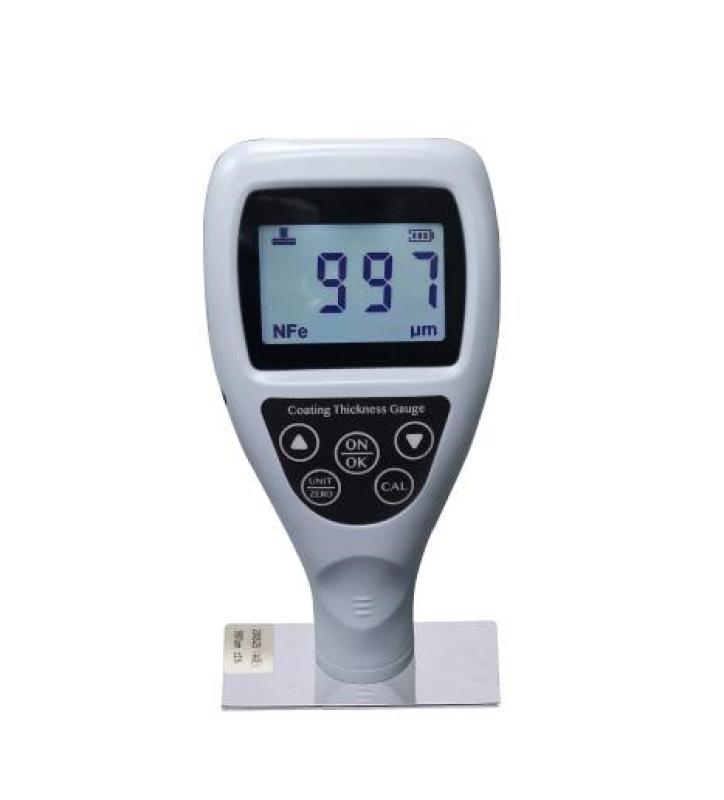
This instrument is a portable coating Thickness Gauge for iron and aluminum, which can automatically identify the substrate, and adopts magnetic induction and eddy current automatic conversion. The measurement method complies with international standards ISO2178, ISO2360 and national standards GB4956, GB4957. It can precisely measure the thickness of coating and coating, and can be used in both laboratory and engineering site. This instrument is widely used in manufacturing, metal processing, chemical industry, commodity inspection and other detection fields, and is an important instrument for material protection.
The main function
● Two thickness measurement methods, magnetic and eddy current, can be used to measure the thickness of non-magnetic coatings (such as aluminum, chrome, copper, enamel, rubber, paint, etc.) on magnetic metal substrates (such as steel, iron, alloy and hard magnetic steel, etc.) etc.) and the thickness of non-conductive coatings (such as enamel, rubber, paint, plastic, etc.) on non-magnetic metal substrates (such as copper, aluminum, zinc, tin, etc.);
● The spring guide sleeve probe with low-wear hard metal probe can not only measure on hard or rough surfaces, but also ensure that the probe has constant pressing force and stable sampling value;
● Wide measurement range and high resolution;
● Automatic memory calibration value, easy to use;
● Can automatically identify magnetic and non-magnetic substrates;
● Integrated structure, small size and light weight;
● Digital backlight display, no parallax, suitable for night use;
● Using the optional RS232C software and cable, it can communicate with PC computer to realize the functions of data collection, processing, analysis and printing;
● The instrument is equipped with automatic shutdown to realize power saving function.
Product Description
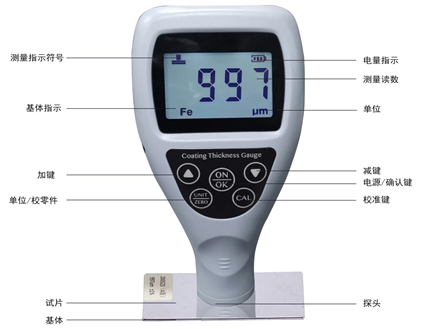
Instrument Calibration
zero calibration
Press the measuring probe on the reference block (or the uncoated measuring body), and then lightly press the zero calibration key "ZERO" to perform zero calibration. When pressing the "ZERO" key, the measuring probe should not shake on the reference block. At the same time, it should be noted that the probe can only be lifted after pressing the "ZERO" key, otherwise, the zero calibration will be incorrect. Repeatable operation for more accurate calibration.
full calibration
1. According to the coating thickness to be measured, select an appropriate standard diaphragm for full scale calibration.
2. First place the standard diaphragm on the reference block (or on the measurement substrate without coating).
3. Then press the measuring probe on the standard diaphragm, and the measured value will be displayed on the display. If the measured value is different from the standard diaphragm, the measured value can be corrected by pressing the plus 1 key or minus 1 key.
4. In order to ensure the accuracy of the calibration, it can be verified by measuring the same standard diaphragm several times.
- 1Measurement principle of commonly used coating Thickness Gauge
- 2Basic principle and application scenario of steel Coating Thickness Gauge
- 1GB/T 44757-2024《Anodizing coating on titanium and titanium alloys》
- 2QJ 990.3A-2011《Inspection methods of coating.Part 3:Measurement of coating thickness》
- 3NF EN ISO 2808-2007《Paints and varnishes - Determination of film thickness.》
- 4GB/T 13448-2019《Test methods for prepainted steel sheet and strip》
- 5JJG 818-2018《Magnetic and Eddy Current M easuring I nstrument for Coating Thickness》
- 6GB/T 1727-2021《General methods for preparation of coating films》
- 7HG/T 20720-2020《Construction and acceptance specification of waterborne anti-corrosion coatings for steel structures in industrial buildings》
- 8HG/T 5367.1-2018《Coatings for rail transit vehicles - Part 1: Waterborne coatings》
- 9ISO 2808-2019《Paints And Varnishes - Determination Of Film Thickness》
- 10GB/T 4956-2003《Magnetic substrate, nonmagnetic overlay, overlay thickness measurement magnetic method》