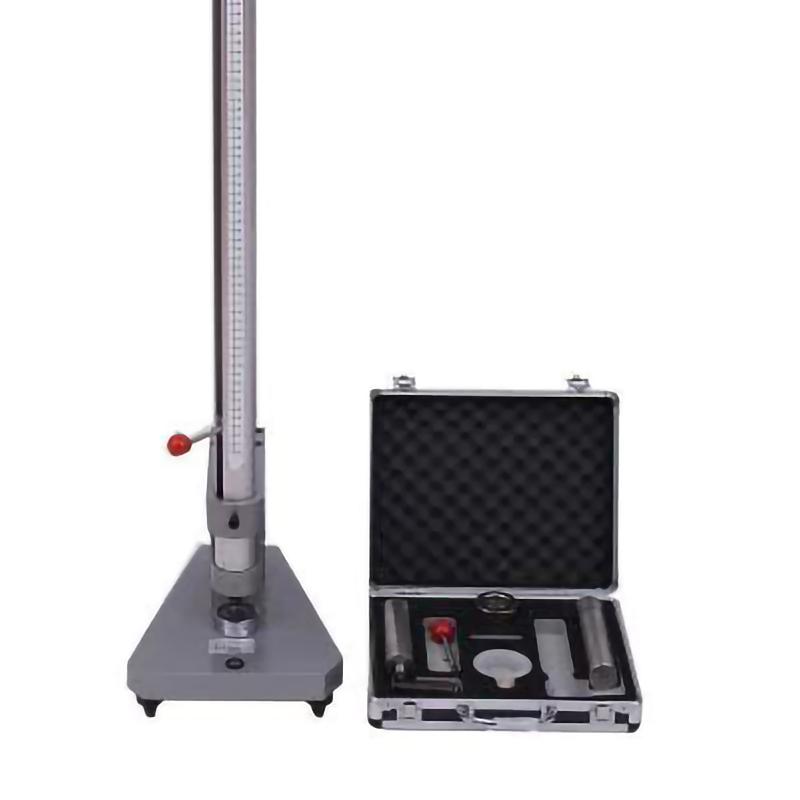

JINGKELIAN ZCJ High-Duty Impact Tester
SE ZCJ
ZCJ

-
 PUSHEN TCJ-II resilience impact test instrument 100cm/1000g ISO/ASTM$ 730.00SE
 -
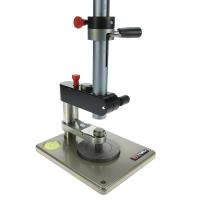 Falling ball impact test instrument, Dutch TQC SP1891 standard ISO 6272-1 and ASTM D2794$ 4545.00SE
 -
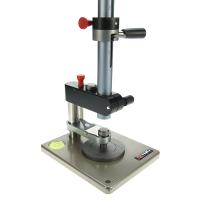 TQC SP1880 Impact Tester meets ISO6272 and ASTMD2794 standards$ 4161.00SE
 -
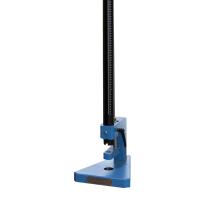 MODERNER ZCJ Heavy-duty impact Tester for impact testing and penetration testing of various coatings for construction




JingKeLian ZCJ Heavy-Duty Impact TesterSPEC
JingKeLian ZCJ Heavy-Duty Impact TesterDetails
JingKeLian ZCJ Heavy-Duty Impact TesterPacking list

- SKU
- NB037838
- Impact height
- 1250mm
- Drop Weight Mass
- 300g、1000g
- Striker Diameter
- F15.9mm 、 F12.7mm
- die base aperture
- F16.3mm 、 F31.75mm
- Table size
- 300*240*35mm
- Standards
- GB/T 20624.2-2006 ISO6272.2, ASTM D2794, D3029, D4226 and chemical industry Water-based woodenware coatings and other standards.
Principle
Heavy-duty impact testing machines have a wide range for impact resistance testing and are suitable for many types of layers, such as coatings. Varnishes, waterborne wood coatings, high viscosity plastic coatings and laminated coatings. It can be used in quality management standards for impact tests and penetration tests in construction; plastics, resins, FRP, boards, wooden box boards, etc. The test method complies with GB/T 20624.2-2006 ISO6272.2, ASTM D2794, D3029, D4226 and the standards of water-based wood coatings in the chemical industry. Test methods include pass/fail testing (i.e. testing with a weight of specified mass and a drop height to see if the test results meet specified specifications) and step testing (i.e. testing by gradually increasing the weight height and/or mass). Determination of the minimum mass and drop height when the coating cracks or peels off from the substrate).
Structure and Specifications
structure
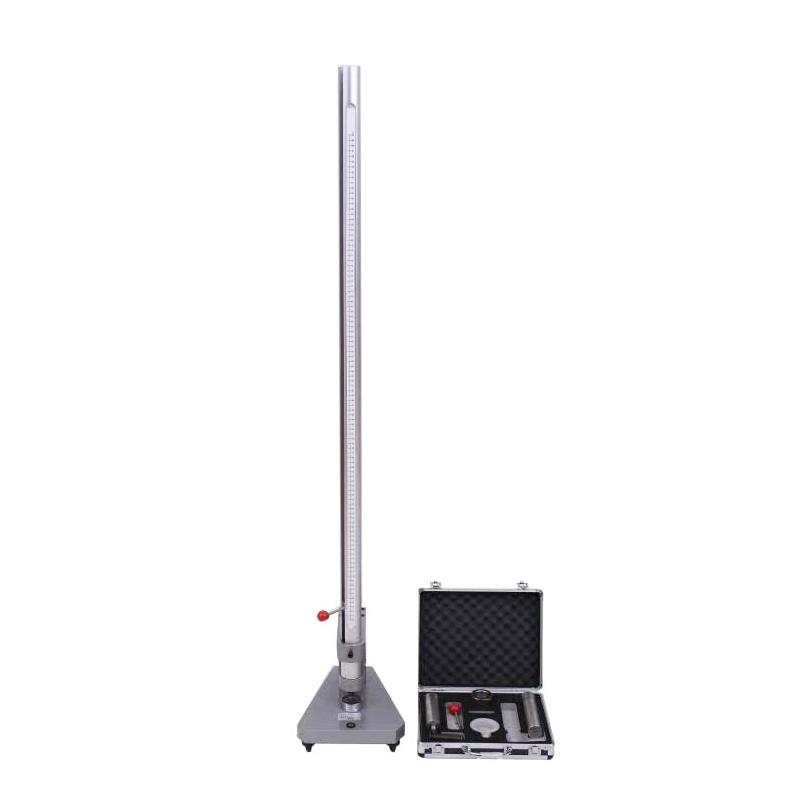
The heavy-duty impact Tester is mainly composed of a conduit, a height limit ring and a base. There are two types of scales on the catheter, centimeters and inches, corresponding to ISO and ASTM standards.
Specification
a. Base size: 300mmx240mmx35mm (length´width´height)
b. Conduit height: 1250mm
Experimental procedure
(1) Test preparation
1) Prepare your own visual lens with a magnification of 10 times.
2) Put the instrument on a level table or ground.
3) Select the corresponding punch to put in according to the required standard.
4) According to the selected punch, select the corresponding die base and put it in.
5) Put the catheter in and lock it with the locking handle.
6) Put the height limit ring over the conduit and fix it with screws.
(2) Test steps
a. Pass/fail test:
1) Adjust the height of the height limit ring so that the indicated scale just meets the specified drop weight height.
2) Put the test plate on the mold base, so that the painted surface is up or down, so that the indentation can be concave or convex, turn the hand wheel to make the compression sleeve press the test plate, loosen the weight to make it It falls onto the test plate.
3) Check the coating with a lens to see if the coating has cracked or peeled off from the substrate, and if the substrate has cracked.
4) Repeat the test four more times at different positions of the test plate (5 drop weight points in total), if at least 4 test points are not cracked or peeled off from the substrate, the coating is qualified.
The above is a typical pass/fail test for coatings. In the pass/fail test of the chemical industry standard for water-based woodware, it is stipulated that a punch with a diameter of 12.7 and a weight of 300g should be used. If there is no peeling and cracking of the paint film in the impacted deformation area (color marks can be used if necessary) Smudge the deformed area with a pen, wipe off the remaining color on the surface after a while, and then check), then the impact point is passed. Test two test boards, impact 5 points on each board, if there are at least 3 points on one of the test boards without falling off and cracking, then the test item is rated as "passed".
b. Grading test:
1) Adjust the height of the height limit ring so that the indicated scale just meets the specified drop weight height, and no damage should be expected at this height.
2) Put the test plate on the mold base, so that the painted surface is up or down, so that the indentation can be concave or convex, turn the hand wheel to make the compression sleeve press the test plate, loosen the weight to make it It falls onto the test plate.
3) Remove the test plate from the device and observe the cracking of the coating in the impact area. If there is no obvious crack, operate at a higher height until cracking is observed. According to the weight used, it is 1kg (2 lbs. ), and the height increments are 25mm (1 inch) or multiples of 25mm (1 inch) respectively. If no cracking is observed with the weight at the maximum height permitted by the instrument, repeat the operation with 2kg (4 lbs).
4) Once cracking is observed at a certain height, proceed as follows: drop to the test plate 5 times at this height and at a height 25mm (1 inch) higher than this height and 25 mm (1 inch) lower than this height, that is, a total of 15 times whereabouts. The test is carried out in any manner so that all impacts at the same height are not consecutive or are tested on only one test plate. 5) Use a lens to check whether the coating is cracked or peeled off from the substrate, and list and count the 15 results of pass and failure. A composite mass/height report of the resulting change for most of these failures is the endpoint of impact failure. 6) If the end point cannot be obtained according to the above operations, repeat steps (4), (5), and take all three heights as applicable values to ensure that the range of test heights is used to replace the end point of impact damage.
c. Hammer, punch, die holder
Punch a 12.7mm (0.625in)
Punch b 15.9mm (0.5in)
Die base a 16.3mm (0.64 in)
Die base b 31.75mm (1.25in)
Falling weight 300g (corresponding to water-based wood coating standards)
Falling weight 1000g Additional weight 1000g
Corresponding ASTM D 2794 of the punch and die base specified in the test method—impact resistance of coatings Punch a--die base a Punch b--die base a
ASTMD 3029—Impact resistance of rigid plastic plates (G method) Punch b--die base a Punch b--die base b
ASTMD 4226—PVC impact resistance punch a--die seat a
HG chemical industry standard water-based wood coating punch a--die base a
Precautions
1. The test should be carried out under constant temperature and humidity conditions.
2. Sampling of test samples, treatment of test panels, drying, etc. should be carried out in accordance with the regulations in the standard.
3. After all the tests are finished, remove the accessories of the instrument and put them back in place to protect the cleanliness of the instrument.
- 1JJF 002-2015《Calibration Specification for Film Impact Testers》
- 2SH/T 3022-2019《Design standard for anticorrosion coating of equipment and piping in petrochemical industry》
- 3ASTM 《Standard Specification for Aluminum Particle-Filled Basecoat/Organic or Inorganic Topcoat, Corrosion Protective Coatings for Fasteners》
- 4JT/T 821.1-2011《Anti-corrosive coatings for concrete bridge surface.Part 1: Solvent based coatings》
- 5DL/T 2308-2021《Technical specification for conductive anticorrosion coating for grounding in power engineering》
- 6JG/T 224-2007《Anticorrosive coatings for building steel structure》
- 7HG/T 5060-2016《Anticorrosive coatings for liquified natural gas (LNG) tanks》
- 8HG/T 4338-2012《High-chlorinated polyethylene anti-corrosion coatings》
- 9 0025-2018《PBC Biological Heavy Anti-corrosion Coating》
- 10HG/T 5176-2017《Water-based anticorrosive coatings for steel structures》