
CHINA NBC-101-6Z Martindale friction testing machine, six stations
SE NBC-101-6Z

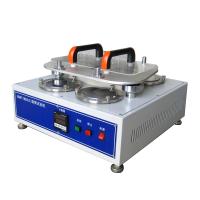
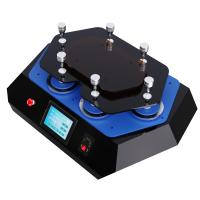

Factory NBC-101-6Z Wear testing machineSPEC
Factory NBC-101-6Z Wear testing machineDetails
Factory NBC-101-6Z Wear testing machinePacking list
- SKU
- NB044603
- station number
- 6 groups
- expected count
- 0~999999 times
- Cumulative count
- 0~999999 times
- Clothing sample Weight
- 395g
- Stainless steel butterfly sheet
- 260g
- Husband holder
- 200g
- Furniture decoration sample Weight
- 594g
- Maximum run
- 24±0.5mm、 60.5±0.5mm
- Effective friction diameter of grinding block
- A type 200g (1.96N) friction head 28.8-0.084mm; B type 155g (1.52N) friction head 90- 0.10mm
- Relative moving speed of gripper and mill
- 50-2R/min loading
- Bell Mass
- 2385±10g
- Weight
- 100kg
- consumables
- 4 sheets of wool felt and 4 sheets of test cotton cloth.
- Power
- Ac220V 50H2
Introduction
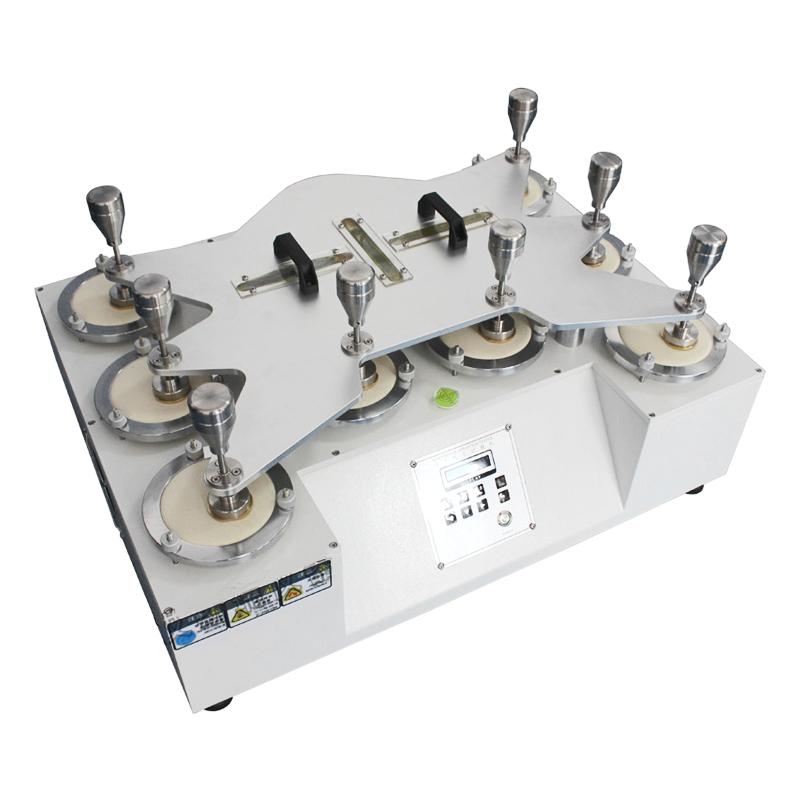
The Martindale friction Tester is a device used to test the friction resistance of materials. This testing machine is commonly used to evaluate the wear resistance of different materials, including textiles, leather, rubber, coatings, plastics, and more. Friction resistance testing is important for quality control and performance evaluation of materials because it simulates the wear and tear that a material may experience in daily use.
Martindale friction testing machines typically include the following major components and features:
Friction head: A component used to apply friction and come into contact with the material being tested.
Rotating platform: A platform that supports the material being tested and can rotate or move on a flat surface to simulate friction between the material and other surfaces.
Load Cell: Controls the load or pressure exerted on the friction head to simulate stresses under actual usage conditions.
Control system: used to control the operation of the testing machine, including parameters such as applied friction force, test time and speed.
Data recording and analysis system: used to record data during testing, such as friction force, friction coefficient and friction resistance performance indicators, and conduct subsequent data analysis.
Features
This instrument is designed by absorbing the advantages of similar instruments at home and abroad. It has a beautiful appearance and is easy to operate. The microcomputer system adopts two counting methods, which is intuitive and generous, and is easy to set. Eight stations can be tested at the same time to improve test efficiency.
The instrument also has two Lissajous 24mmx24mm and 60.5mmx60.5mm motion trajectories and a variety of supporting accessories, which can adapt to a variety of test method standards.
Standards compliant
Tests on the pilling degree of fabrics such as GB/T4802.2, ASTM D4970, ISO12945-2, etc.
GB/T13775, ASTM D4966, ISO12947 and other fabric wear resistance tests.
- 1Paint film abrasion resistance and test method thereof
- 2Paint film adhesion and test method thereof
- 3Introduction of varnish detection method and application
- 4Basic Principle and Application Analysis of Asphalt Wear testing machine
- 5Briefly introduce the working principle, application and selection precautions of rubber Wear testing machine
- 6Principle, Application and Selection of Adhesive Tape Wear testing machine
- 7Introduction to common wear resistance test methods
- 1ISO 12947-3《Textiles - Determination of the Abrasion resistance of Fabrics by the martindale method - Part 3: Determination of mass loss》
- 2ISO 12947-4《Textiles - Determination of the Abrasion Resistance of Fabrics by the Martindale Method - Part 4: Assessment of Appearance Change》
- 3ISO 5470-2《Rubber or Plastics Coated Fabrics - Determination of Abrasion Resistance - Part 2: Martindale Abrader》
- 4ISO 12947-2《Textiles - Determination of the abrasion resistance of fabrics by the Martindale method - Part 2: Determination of specimen breakdown》
- 5ISO 17076-2《Leather - Determination of abrasion resistance - Part 2: Martindale ball plate method》
- 6ISO 《Textile floor coverings - Test methods for the determination of fibre bind using a modified martindale machine》
- 7ISO 12947-1《Textiles - Determination of the Abrasion resistance of Fabrics by the martindale method - Part 1: Martindale Abrasion testing apparatus》
- 8ASTM D4966《Standard Test Method for Abrasion Resistance of Textile Fabrics (Martindale Abrasion Tester Method)》
- 9FZ/T 98014-2016《Martindale abrasion and pilling tester》
- 10GB/T 21196.1-2007《Textiles - Determination of the abrasion resistance of fabrics by the Martindale method - Part 1: Martindale abrasion testing apparatus》