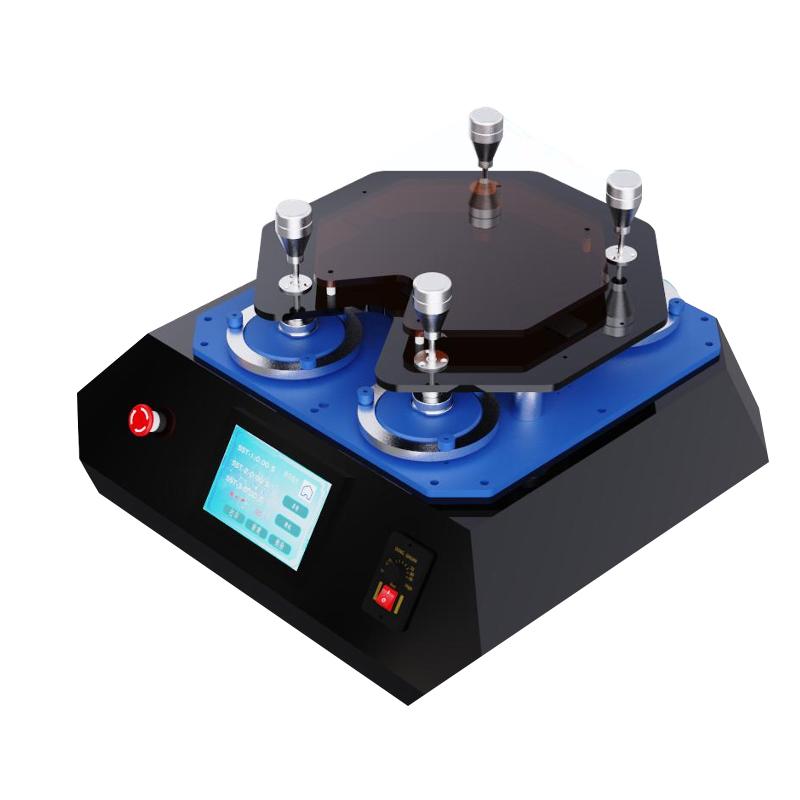
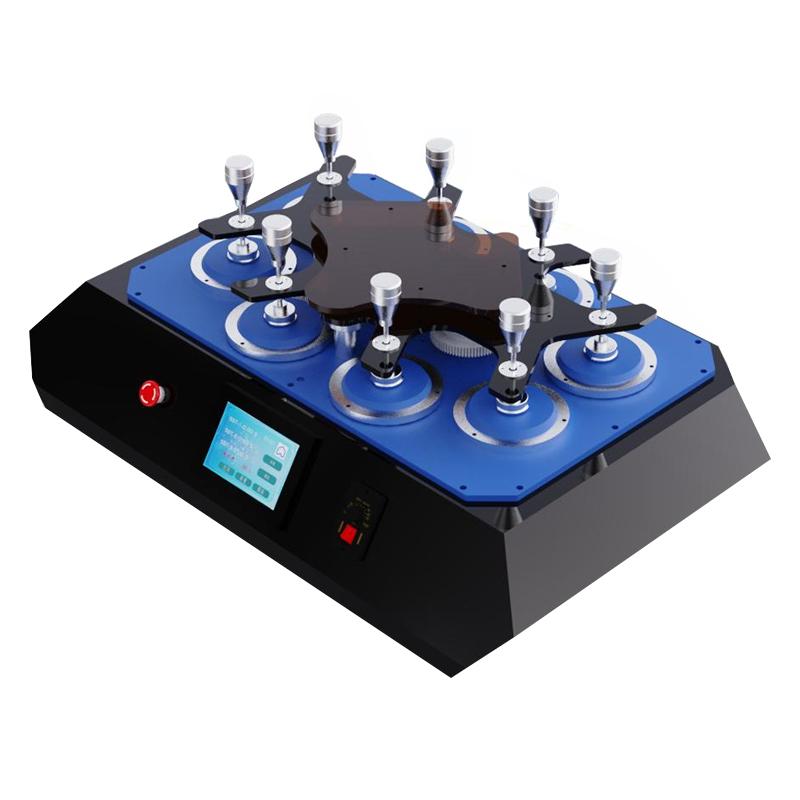
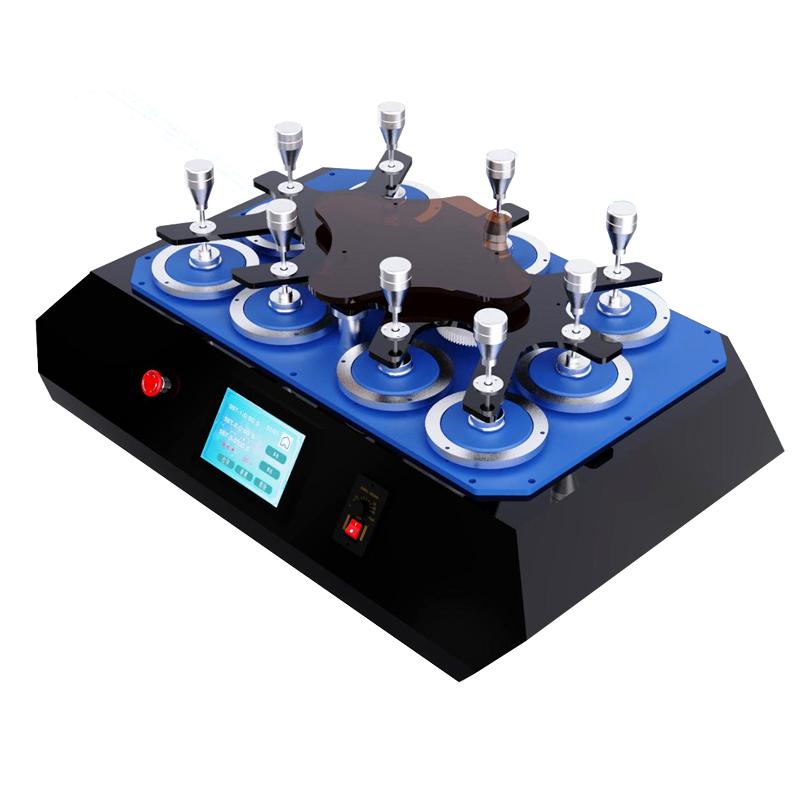

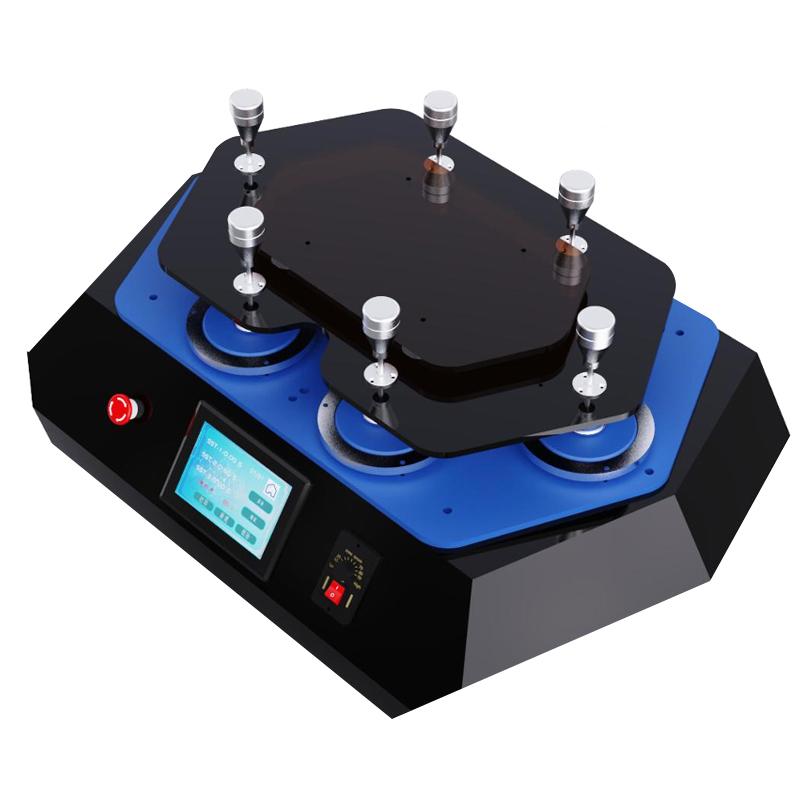
HUITAO HT- 2285-6 six-station Martindale Wear resistance instrument
SE HT-2285-6

huitao HT-2285-6 Martindale Abrasion TesterSPEC
huitao HT-2285-6 Martindale Abrasion TesterDetails
huitao HT-2285-6 Martindale Abrasion TesterPacking list

- SKU
- NB048288
- Friction method
- swirl/ spin
- Frictional contact form
- face
- station number
- 6 digits
- Count range
- 0-999999 times
- Great travel
- Horizontal 60.5 +/- 0.5mm, Vertical 24 +/- 0.5mm
- Pressurized Mass
- Gripper: 200 +/- 1g, Clothing sample Weight: 395 +/- 2g, Furniture decoration sample Weight: 594 +/- 2g, Stainless steel disc: 260 +/- 1g
- Effective friction diameter of grinding block
- A type 200g (1.96N) friction head (9KPa) 28.8-0; B type 155g (1.52N) friction head (12 KPa) 90-0.1 mm
- Relative velocity of gripper and mill
- 20-70R/min (adjustable)
- Loading hammer Mass
- 2385±10g
Scope of application
It is suitable for performance testing of woven fabrics, knitted fabrics, non-woven fabrics, decorative materials, coated fabrics, etcand tests of apparent pilling performance.
Meets standards
1. Standards:
ISO 5470: Rubber or plastic-coated fabrics – Determination of abrasion resistance
ISO12945.2:Determination of fabric pilling by Martindale method
2. United States Society for Testing Materials:
ISO12947:Textiles Determination of the abrasion resistance of fabrics using the Martindale method
ASTM D4966:Fabric Abrasion Resistance Test Martindale Abrasion Resistance Tester, and other products impact resistance test
ASTM D4970:Textile Abrasion Resistance Test Martindale Method
3. Chinese National Standards:
GB/T 4802.2:Textiles Determination of the pilling properties of fabrics
GB/T21196 :Textiles Determination of Abrasion Resistance of Martindale Fabrics (Martindale Abrasion TestTester, Measurement of Specimen Breakage, Measurement of Mass Loss, Evaluation of Appearance Change)
GB/T13775:Abrasion resistance test of cotton, linen and silk woven fabrics
4. EU Standards:
EN ISO 12947:Textiles Determination of abrasion resistance of Martindale fabrics
5. United Kingdom Standards Institution
BS ISO12947:Determination of wear resistance of fabrics by Martindale method for textiles, etc
Operating Principle
The fabric to be tested is mounted in the upper specimen grip and rubbed against the abrasive mounted on the grinding table. The friction trajectory isLi Sharu graphics. After the specified friction phase according to the test requirements, the fabric is removed and the abrasion resistance index is measuredCalculate or visually describe the raising and pilling grades of the specimen.
- 1ISO 12947-3《Textiles - Determination of the Abrasion resistance of Fabrics by the martindale method - Part 3: Determination of mass loss》
- 2ISO 12947-4《Textiles - Determination of the Abrasion Resistance of Fabrics by the Martindale Method - Part 4: Assessment of Appearance Change》
- 3ISO 5470-2《Rubber or Plastics Coated Fabrics - Determination of Abrasion Resistance - Part 2: Martindale Abrader》
- 4ISO 12947-2《Textiles - Determination of the abrasion resistance of fabrics by the Martindale method - Part 2: Determination of specimen breakdown》
- 5ISO 17076-2《Leather - Determination of abrasion resistance - Part 2: Martindale ball plate method》
- 6ISO 《Textile floor coverings - Test methods for the determination of fibre bind using a modified martindale machine》
- 7ISO 12947-1《Textiles - Determination of the Abrasion resistance of Fabrics by the martindale method - Part 1: Martindale Abrasion testing apparatus》
- 8ASTM D4966《Standard Test Method for Abrasion Resistance of Textile Fabrics (Martindale Abrasion Tester Method)》
- 9ISO 5470-1-2016《Rubber- or plastics-coated fabrics - Determination of abrasion resistance - Part 1: Taber abrader (Second Edition)》