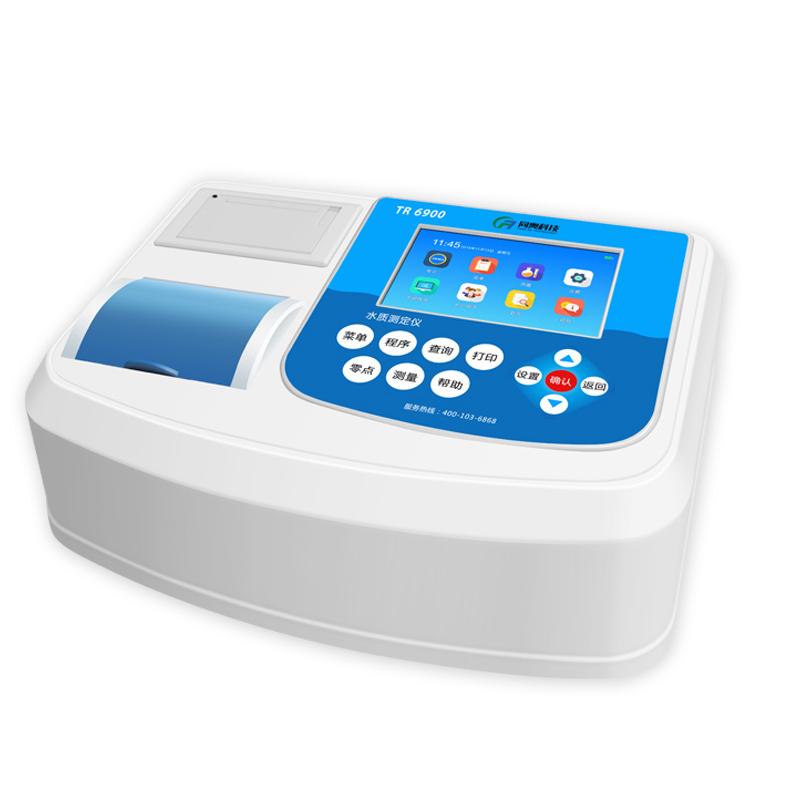

TONGAO NBC-6900D STIP-scan COD Ammonia nitrogen, total phosphorus, total nitrogen turbidity Suspension
 NBC-6900D

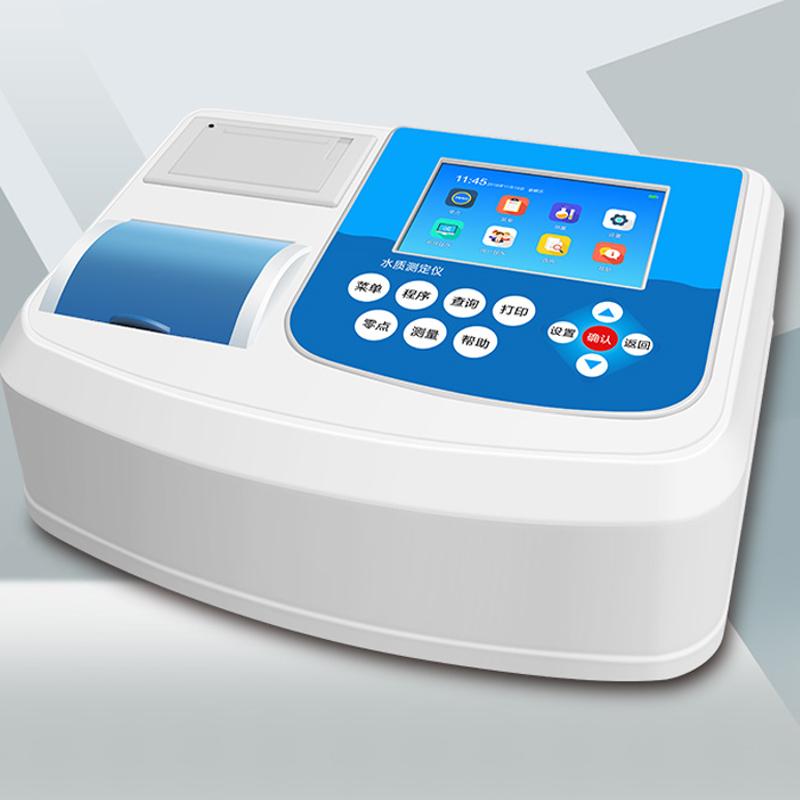
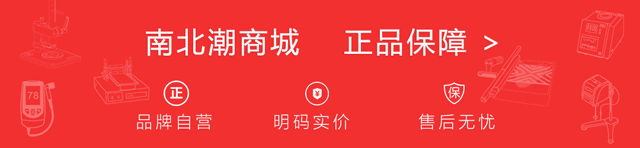
TongAo NBC-6900D Desktop STIP-scanSPEC
TongAo NBC-6900D Desktop STIP-scanDetails
TongAo NBC-6900D Desktop STIP-scanPacking list
- SKU
- NB050418
- Measurement parameter
- COD, ammonia nitrogen, total phosphorus, total nitrogen, turbidity, suspended solids
- measurement error
- ≤± 5%
- Sexual repeability
- ≤±5%
- Optical inspection stability
- ≤ +/- 0.001A/20min (100,000 hours life)
- data storage
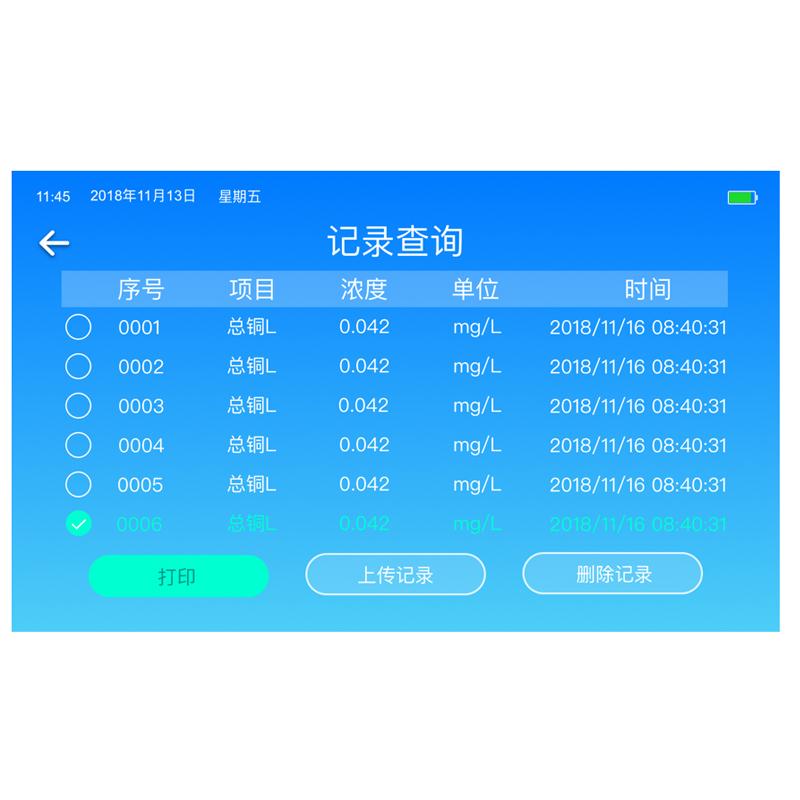
- 30,000 records (including item, date, time, sample ID, etc.)
- Linear dispersion quantity
- 96 Linear dispersion (expandable)
- printer
- Built-in thermal printer
- Display
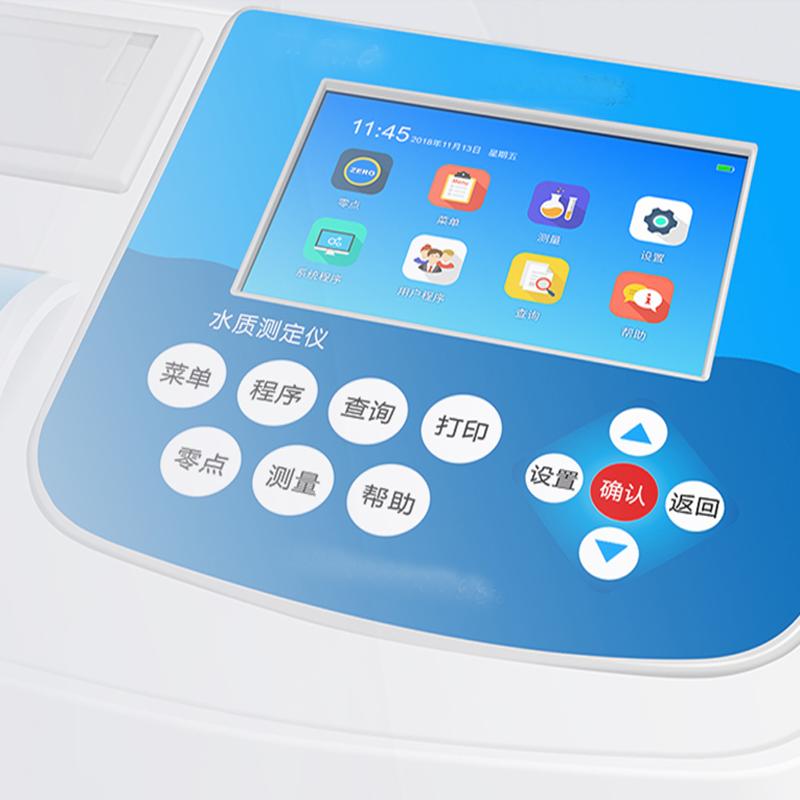
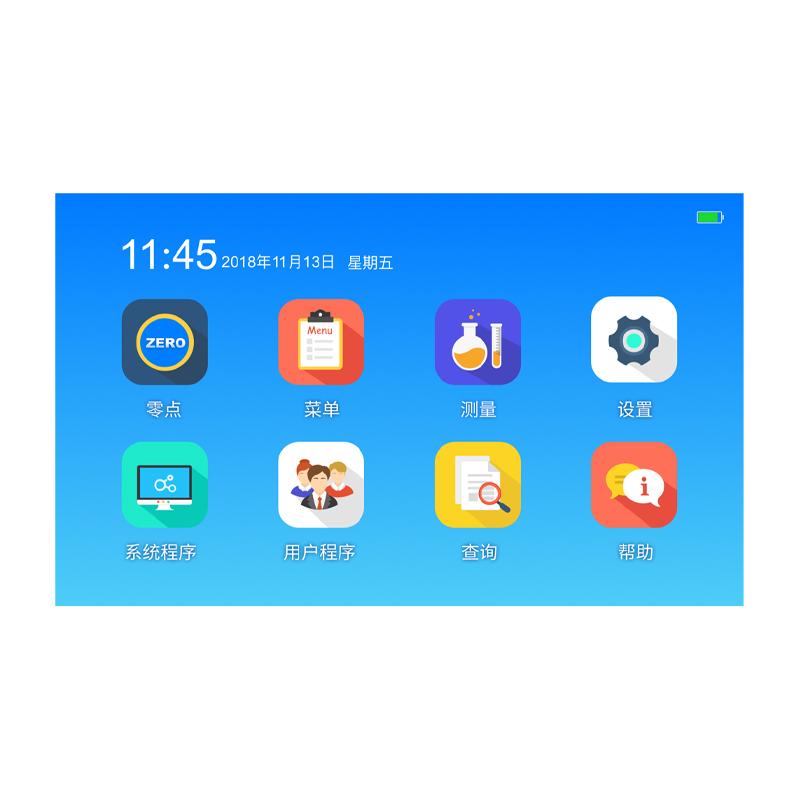
- 5-Inch high-definition color LCD screen
- batch Volume
- 16/25 water samples/batch
- Colorimetric method
- Digestion Colorimetric tube
- sample compatibility
- 16 mm (round), 25mm (round)
- communication interface
- USB cable, LAN, etc
- exception notification
- Blank comparison prompt, over-range prompt, etc
- operation interface
- Membrane push-button operation, Chinese/English (optional)
- Power Supply
- AC(220V±10%),50Hz
- power
- 5W
- protection class
- IP30
- Environment humidity
- ≤ 85% non-condensing
- Environment temperature
- 5~40℃
- Dimensions
- 348*250*145mm
- instrument Weight
- Main unit less than 2.6kg
- COD detection method
- Method 1: HJ/T399-2007 standard; Method 2: Import detection method
- COD Measurement Range
- 0-20000mg/L;0-20000mg/L
- Lower limit of COD detection
- 3 mg/L;2 mg/L
- COD digestion environment
- 165℃,15min;165℃,20min
- COD anti-chlorine interference
- 1000 mg/L (expandable); 1000 mg/L (expandable)
- Ammonia nitrogen detection method
- HJ535-2009 "Water quality, determination of ammonia nitrogen, Nessler reagent Spectrophotometric method, spec-trophotometry"
- Ammonia nitrogen Measurement Range
- 0-50 mg/L
- Ammonia nitrogen detection lower limit
- 0.01mg/L
- Ammonia nitrogen digestion environment
- No need to digest
- Total phosphorus detection method
- GB11893-89
- Total phosphorus Measurement Range
- 0~20mg/L
- Total phosphorus detection limit
- 0.01mg/L
- Total Phosphorus Digestion
- 125℃,30min
- Turbidity detection method
- Spectrophotometric method,spec-trophotometry
- Turbidity Measurement Range
- 0~1000NTU
- Lower limit of turbidity detection
- 0.5NTU
- Turbidity digestion environment
- No need to digest
- Suspension detection method
- Direct Colorimetry
- Suspension Measurement Range
- 0~500mg/L
- Lower limit of suspended solids detection
- 2mg/L
- Suspension digestion environment
- No need to digest
- TN detection method
- Persulfate oxidation
- TN Measurement Range
- 0~250mg/L
- TN detection lower limit
- 0.5 mg/L
- TN digestion environment
- 125℃,30min
Product Introduction
The instrument can quickly determine COD, ammonia nitrogen, total phosphorus, total nitrogen, turbidity, suspended solids, etc. in various water quality, and integrates mature technology in the field of water quality analysis, making the entire analysis system more perfect, simpler and faster operation, and more stable and reliable detection results. It is widely used in emergency monitoring, industrial wastewater, domestic sewage, sewage treatment, chemical industry, food, beverage, textile printing and dyeing, electroplating, papermaking, petroleum metallurgy, river management, scientific research units, colleges and universities and other fields.
Principle of operation:
The digestion colorimetric integrated tube and the multi-channel water quality rapid Tester can be used seamlessly, and are compatible with φ25mm colorimetric tubes.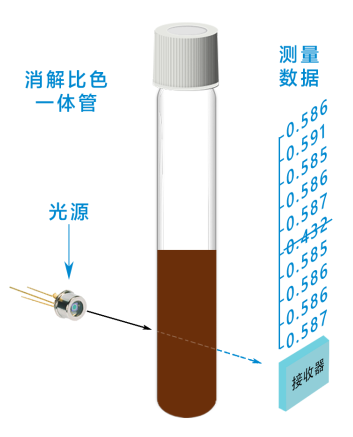
● The testing of each parameter is in line with national standards, industry standards or international standards.
● Two built-in COD detection methods
Method 1: HJ/T399-2007 (National Standard)
Method 2: Import testing method
● The standard detection parameters are as follows:
- COD (Prefabricated Reagents)
- COD (Powder Pack Reagent or Custom Reagent)
- Ammonia nitrogen (NH3-N)
- Total Phosphorus (TP)
- Turbidity - Suspended Solids (SS)
● Strong scalability in the later stage, including but not limited to the following parameters:
- Total nitrogen - phosphate
- Total Chromium - Hexavalent Chromium
- Iron - nickel
- Zinc - Copper
.......
Operating Principle
1. Dissolve colorimetric integrated tube
The digestion colorimetric tube is used for operation, and the digestion of the sample and the reading of the results share a reaction tube, so there is no need to transfer the liquid to the cuvette for testing.
2. Direct display of results
The absorbance of the sample is measured by using a cold light source of a specific wavelength, and the instrument system directly converts the detection result into the sample concentration value through a specific algorithm.
3. Measure and remove outliers multiple times
Measure the water sample 10 times or more, remove outliers and take an average to reduce the impact of dirt, scratches, fingerprints, or defective glass tubes on the results.
4. Detect abnormal prompts
Indicate detection anomalies, such as blank comparison prompts, result overrun upper limit prompts, etc.