What is the binding force of the coat?

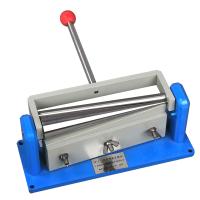
Poor coating adhesion will cause coating peeling (also known as peeling), which not only directly affects the appearance quality of the product, but also makes the coating protective and functional (such as width, conductivity, welding performance, corrosion resistance, etc.) Both lose their effect. Therefore, if the adhesion of the coating is unqualified, no other performance tests are required, which shows the importance of the adhesion of the coating. (Related instruments: adhesion Tester)
1. Coating Formation
The spraying material powder or particles heated to a molten or nearly molten state fly from the Spray Gun to the surface of the substrate at high speed, and hit the surface of the substrate at high speed one after another. After the collision, flat deformation occurs, and a coating is formed after lamination.
Generally speaking, the particles are generally mechanically combined, but some are locally fused and combined, and the structure between the particles is very complicated. At the same time, during the flight from the nozzle to the surface of the substrate, since the surface of the metal and alloy will be oxidized, the surface of each particle is covered with oxides. In this way, the boundary of the particles must also be mixed with oxides. Therefore, the particles and In addition to the mechanical bonding between the particles, there are parts bonded through such oxides, and the bonded parts where the oxide film is partially broken and the metals of the particles themselves are fused together. In addition, there are also some special cases, such as the coating of active materials (fan, titanium) formed in a completely inert gas medium, which is fused together without an oxide film between the particles. Another example is when molybdenum is sprayed, the surface of the particles will be oxidized violently during flight, but the oxidized part is easy to sublimate, so the thickness of the oxide between the stacked particle groups is very small.
2. Coating strength
The bonding force of the coating, that is, the bonding strength between the coating and the substrate, is closely related to the structure of the interface between the coating and the substrate.
During the spraying process, the flying spraying material powder or particles collide with the roughened substrate surface and mechanically engage with the protrusions and recesses on the substrate surface, which is the main reason for the bonding of the coating and the substrate. Such a bonding mechanism is called For the anchoring effect. In addition, the alloy formed by the sprayed material and the substrate material or the chemical reaction between the two can also improve the bonding force between the coating and the substrate. Secondly, the thin oxide layer formed on the surface of the substrate and the surface of the sprayed particle forms an intermediary to increase the bonding force of the substrate. Adhesion to the coating. There are also diffusion forces, the physical bonding, that also contribute to the bonding of the coating to the substrate.
The metal molybdenum coating has a strong bonding force with the steel substrate. Through the test of the bonding force between the carbon steel coating with a molybdenum bottom spray coating and the mild steel substrate, it can be seen that there is no gap between the substrate and the molybdenum coating particles. Destruction occurred between the molybdenum particles and the carbon steel particles, which shows that the bonding force between the molybdenum coating and the steel substrate is relatively strong. The reason is: during the spraying process, the surface of the molybdenum particles is oxidized in flight, but at the same time as the oxidation occurs, the oxide sublimates sharply, so the molybdenum particles in the molten state covered by a very thin oxide film and the surface of the substrate At the moment of the collision, the oxide film is destroyed, and the pure high-temperature molybdenum particles directly contact with the surface of the base surface, and fusion occurs to form a metal bond. Therefore, the bonding force is strong. From the electron microstructure, it can be seen that there is a bonding layer between the two in the vicinity of the boundary surface, during which the interaction between metals or local melting bonding occurs. When molybdenum is sprayed on cobalt and nickel-chromium alloy substrates, an alloy layer will also be produced on the boundary between the substrate and the molybdenum coating.
Another example is that in high-purity dry nitrogen, when the plasma jet method is used to spray tungsten on the pretreated tungsten plate, a coating that is completely melted and combined with the substrate can be obtained. From the optical and electron microstructure photographs of the boundary between the tungsten substrate and the coating, it can be clearly seen that the newly formed boundary is connected across the boundary.
There is also a high bonding force between the molybdenum coating and the aluminum substrate. However, the binding force of molybdenum to copper and its alloy matrix is low. This is because of the high thermal conductivity of copper. When the molybdenum particles are impacted, the matrix will be cooled sharply before the minimum fusion required for the formation of the alloy layer is formed. the result of.
The steel coating sprayed on the steel substrate by the electric arc method, and the boundary surface between the substrate and the coating can be observed with an electron microscope, and it can be found that there is a local metal bond, which is formed by the anchoring effect and physical bonding. On the boundary surface, there are With a 2~3µm thick interdiffusion layer. In addition, there is also a diffusion bonding layer at the interface between the aluminum coating made by electric arc spraying and the steel substrate.
The plastic coating is bonded to the substrate surface by dispersion forces. However, if the substrate is metal, due to the large difference in thermal expansion coefficient between the coating and the substrate, the coating will easily fall off from the substrate during cooling after spraying. In this case, the surface of the substrate should be roughened first in order to maintain a considerable bonding force. Therefore, macroscopically speaking, there is also a mechanical combination between the plastic coating and the substrate. However, the combination of epoxy resin coating and metal substrate is an exception, because the oxygen in the epoxy group at the edge of the epoxy molecule has an effective effect on the chemical combination between the resin and the metal, so the epoxy resin coating The bonding force with the metal substrate is high.
- 1Why is the coat easy to peeling? How to solve it?
- 2Causes and preventive measures of common coating defects of Architectural coatings
石玉梅 - 《混凝土世界》
- 3Analysis of cracking and peeling defects in Coated steel coating construction
- 4Advantages and Disadvantages of Cross Cutting Method, Drawing and Adhesion Method
- 5How to measure the Adhesion of anticorrosive pipe coating?
- 6How to measure the shock resistance of anti-corrosion pipe coating?
- 7How to determine the bending resistance of anti-corrosion pipe coating?
- 8How to test the porosity of anticorrosive pipe coatings?
- 9Coating and coating inspection standards