Adhesion Control of Ship Corrosion Coatings
Adhesion control: Before the coating is used, the adhesion of the coating should be tested. The method should be carried out according to the GB1720-89 standard. It is preferred to make a standard test plate to control the thickness of the coating film, and then use the circle method to measure the adhesion. rating. This is an experiment that must to check whether the performance of the paint meets the specified indicators and to avoid the construction and application of fake and shoddy paint products.
However, due to the influence of many factors such as construction methods, climatic conditions, the shape of the substrate to be coated, the proficiency of workers, the curing maintenance process, etc., the adhesion of the coating film may not reach the original design after the coating work is completed. Requirements, some even fall off completely in the corrosive medium, and the whole coating peels off. It is necessary to conduct an adhesion test on the coating after construction to control the construction quality.
Adhesion test is only carried out when the coating is used in severe corrosive environment, when the technical specification requires checking the adhesion , because this test is destructive. After testing, make repairs. Therefore, it should be used as a last resort.
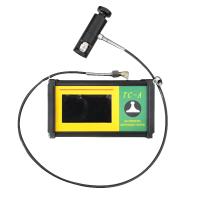
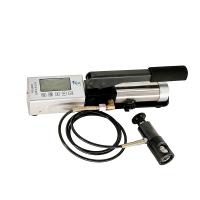
At present, there are four commonly used methods for testing adhesion on the construction site: portable adhesion test (Elcometer adhesion Tester), knife adhesion test, adhesive tape adhesion test and cross -cut test. The Elcometer is the most objective of the four methods listed, not only testing the adhesion of the coating to the substrate, but also measuring the intercoat adhesion between coatings. The detection method and the size of the force have a greater impact. To, need experienced personnel to complete.
The knife test is to use a sharp knife to cut the coating, cut through the coating to the substrate, cut two incisions perpendicular to each other , and then use a small blade to try to separate the coating from the substrate or intersect the coating with the two incisions The layers of coating are separated from each other. If it is easy to peel and separate, it means that the adhesion is not good. Tape adhesion test method According to ASTM D3359-87, there are two test methods: one is to scratch X on the coating film , scratch it to the substrate, and then pull it apart, and evaluate the adhesion qualitatively with a scale of 0~5; Draw 6~7 knife-edges in each direction to penetrate the substrate to form a grid. Paste the pressure-sensitive tape , then tear it off, and evaluate the adhesion according to the description and instructions. The tighter the paste, the less the paint film is pulled out, and the better the adhesion.
The grid method is carried out in accordance with GB 9286-88. Use a special scratcher to score the coating film as deep as the substrate to form grid. Check the cut surface of the test coating, and compare the description with the attached drawings for grading. The cutting edge is completely smooth, and no grid falls off, which is grade 0; there is a little flake separation of the coating at the intersection of the cut, but the impact on the crossed area is obviously not more than 5%, which is grade 0; the coating peeling off at the edge of the cut or intersection is obviously greater than 5 %, 1 but the effect is not more than 15% is grade 1; the coating part or all of the large fragments fall off along the edge, between 15~35% is grade 3; and so on, the adhesion of grade 0 is very good, generally more than Class 2 is considered to have insufficient adhesion in anti-corrosion coatings.
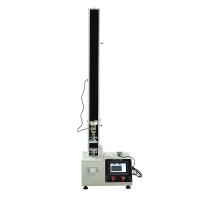
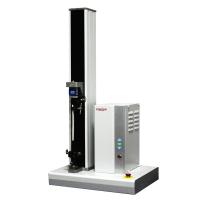
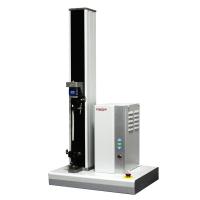
The Elcometer adhesion test is to stick an aluminum test slider on the coating, use a mechanical Tensile Testing Machine with a scale to pull the slider off, and read the pulling force of the aluminum slider from the scale scale. There are three types of failure that may be found in tests performed on metal substrates .
(1) Adhesive failure, that is, after the tensile force, the adhesive layer is broken from the coating or the test slider or is broken inside , which is considered to be the failure of the adhesive. Coating-to-substrate or coating-to-coat adhesion will exceed this value.
(2) Adhesion failure, that is, the coating and the substrate are separated under tension, and this value is the adhesion .
(3) Cohesion failure, that is, the coating itself is pulled off. This value is used as the value of the interlayer adhesion force, and the adhesion force between the coating and the substrate exceeds this value. For each kind of coating, there is a specified value measured by the pull-off method, which is generally required to be greater than 2MPa, and for two-component coatings such as epoxy, greater than 4MPa.
Attention should be paid to the on-site measurement of adhesion: different types of coatings must be completely dry, especially solvent-based coatings such as chlorinated rubber, perchlorethylene, and acrylic acid. It takes more than 2 weeks should be taken seriously. At the same time, the determination of adhesion is related , and the Tester should pay attention to the continuous accumulation of experience. Different substrates, different types of coatings, and different inspection methods have different evaluation criteria.
Different test sites should be selected to repeat the experiment, and the lowest value obtained should be used as the qualified judgment value. After the inspection, the coating film shall be recoated by manual brushing, and the film thickness must reach the original requirement.




- 1Film adhesion detection method and its applicability analysis
- 2Purpose, method, principle and operation points of coating adhesion test
- 3Working principle and application of UV coating Cupping testing device
- 4Principle and Application Analysis of Film Adhesion Tester
- 5Optical inspection device Anti-reflection film adhesion Measuring method
- 6Automatic scratch test to evaluate film strength, hardness, adhesion
- 7Comparison of film adhesion determination methods
- 8Determination of film adhesion
- 9Paint film adhesion and test method thereof