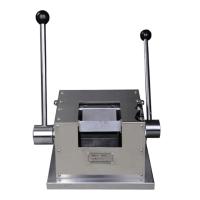
Coating internal stress test - bending rate inspection method
The internal stress of the coating is different from the implementation method of the sub-layer, and the mechanism of the stress is also different.
For the thermal removal coating, the internal stress of the coating is shown as residual stress, which is essentially thermal stress, which is caused by uneven heating, uneven temperature distribution, thermal expansion and cold contraction in the sub-coating and between the coating and the substrate. Temperature strain, thereby forming temperature stress. The magnitude and direction of the stress depend on the coating temperature, substrate preheating temperature, the compactness of the method layer, and the thermodynamic properties of the material. The residual stress of the coating causes the coating to deform, wrinkle, and crack. Even peeling. For thin metal coatings, bending deformation will also occur.
For sub-plating, when the electroplating layer is formed, due to the defects in its metal lattice, internal stress is formed.
The following mainly introduces the bending rate test method.
Curvature test method
The bending rate test method is suitable for sub-testing the residual stress in the thermal spray coating. According to the different shapes of the sub-samples, it can be divided into the rectangular sample method and the circular sample method, and the specific methods are also different. (Related instruments: bending test instrument)
(1) Rectangular sample method
Bending deformation occurs when the material is pressed on the short test plate. The radii of curvature of the two materials are measured respectively, and the arithmetic mean value is taken. Then the layer is separated, the internal stress is released, the residual strain is measured, and the residual stress is finally calculated. The calculation formula is

(2) Ring soft sample method
Coating is applied to one side of the annular base (opening), and after cooling, the ring of the base is deformed by the residual stress, driving the pointer to rotate, and the bending deformation and residual stress are calculated according to the rotation reading.
- 1Overview of resistant coatings
- 2Characteristics and construction points of corrosion resistant Coatings
- 3Application of corrosion resistant coatings on reinforced concrete surfaces
- 4Technological development and application of heavy anticorrosive coatings
- 5Application and performance analysis of silicon diffusion coatings
- 6Research and application of chromium diffusion coatings
- 7High temperature oxidation and corrosion resistance performance and application of aluminum diffusion coatings
- 8Zinc diffusion coating performance process and application
- 9Chromate coating technology and its application
-
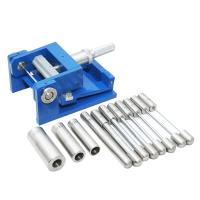
![JINGKELIAN QTY-32-III Film Bending Tester cylindrical mandrel bending test machine, film flexibility]()
-
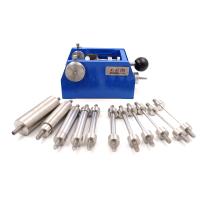
![JINGKELIAN QTY-32 cylindrical mandrel bending Tester to determine the ability of the paint film to deform with the substrate without damage]()
-
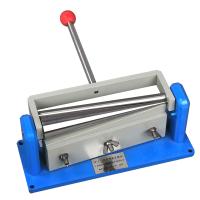
![TRUIT TR 5214 Bending Tester]() TRUIT TR 5214 Bending Tester$ 439.00
TRUIT TR 5214 Bending Tester$ 439.00 -
![MODERNER ZW-I Conical Mandrel Bending Tester - Elongation test of adhesive coatings for paints, varnishes, etc]()
-
![JINGKELIAN QTY-10A cylindrical mandrel bending Tester, eight different diameters cylindrical mandrel]()
-
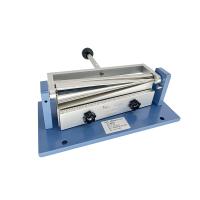
![MODERNER WZJ-II Bending machine, testing equipment for measuring the bending resistance performance of color steel plates and Aluminum Panels]()