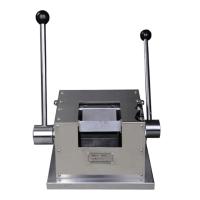
Several common methods for testing coating flexibility
When a coating is applied to a substrate that is subject to deformation, such as plastic or wood, the coating needs to be able to withstand the deformation of the material without failing. Testing the flexibility of the coating can help prevent such coating failures. A common method for testing coating stiffness is to apply the coating to a substrate, allow it to cure, and then bend the substrate and coating around a mandrel.
Flexibility testing is used to determine the elongation and crack resistance of coatings.
Bend and impact tests were used to evaluate the flexibility of the coatings. These tests measure deformation due to bending and impact. With regard to (testing) the flexibility of the coating (on the substrate), deformations can be divided into two types:
Slow deformation (determined using Erichsen Slow Penetration (ESP) and bending substrate and coating using a mandrel)
Rapid deformation (determined, for example, by the impact of letting a heavy object fall on the coated substrate, either on the coating, called a direct impact or on the back of the panel, called a reverse impact).
In summary, the different test equipment used to test the flexibility (and toughness) of coatings can be divided into the following groups:
Mandrel Bending Test
Impact test
cupping test
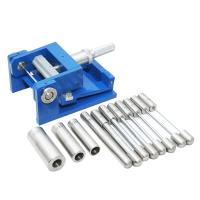
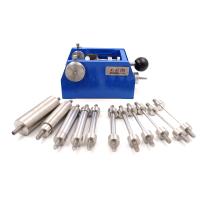
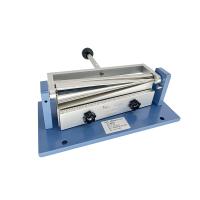
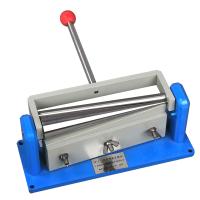
Mandrel Bending Test
To determine the flexibility of a coating, there are two types of mandrel tests—conical and cylindrical, which are commonly used. ASTM D522 is a standard test method for mandrel bend testing of attached organic coatings. It is used to determine the resistance of coatings to cracking when flexed after application and curing on sheet metal or other flexible materials.
In this test method, a fully cured coated panel (sheet metal or substrate of rubber-like material) is bent on a mandrel and the cracking resistance of the coating is determined.
In Test Method A, the coated substrate was bent on a tapered mandrel.

In Test Method B, coated substrates were bent on cylindrical mandrels of different diameters.
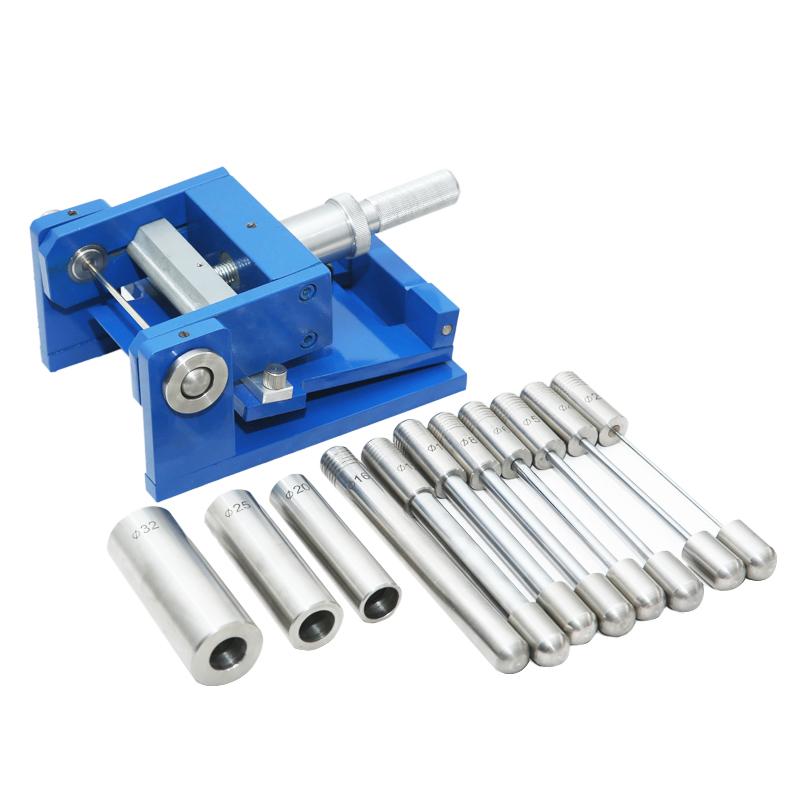
Coated panels can be stretched when the substrate is dimensionally unstable or bent during article manufacture or when the article is abused in use. This elongation can lead to cracking if the coating/curing process is insufficient, causing problems ranging from poor appearance to premature corrosion of the panel substrate. ASTM D522 is used to evaluate a coating's ability to resist cracking when this occurs. They can be used to evaluate the flexibility of coatings on flexible substrates.
Impact test
Impact testing indicates the toughness or impact strength of a coating to absorb energy under mechanical load. The drop impact test (or drop weight impact test) is a commonly used test method for determining impact resistance.
Test standards used for impact testing include:
ASTM D2794 – Test Method for Resistance of Organic Coatings to the Effects of Rapid Deformation (Impact)
ASTM G14 – Standard Test Method for Impact Resistance of Pipeline Coatings (Drop Weight Test)
ISO 6272 - Paints and varnishes - Rapid deformation (impact resistance) test
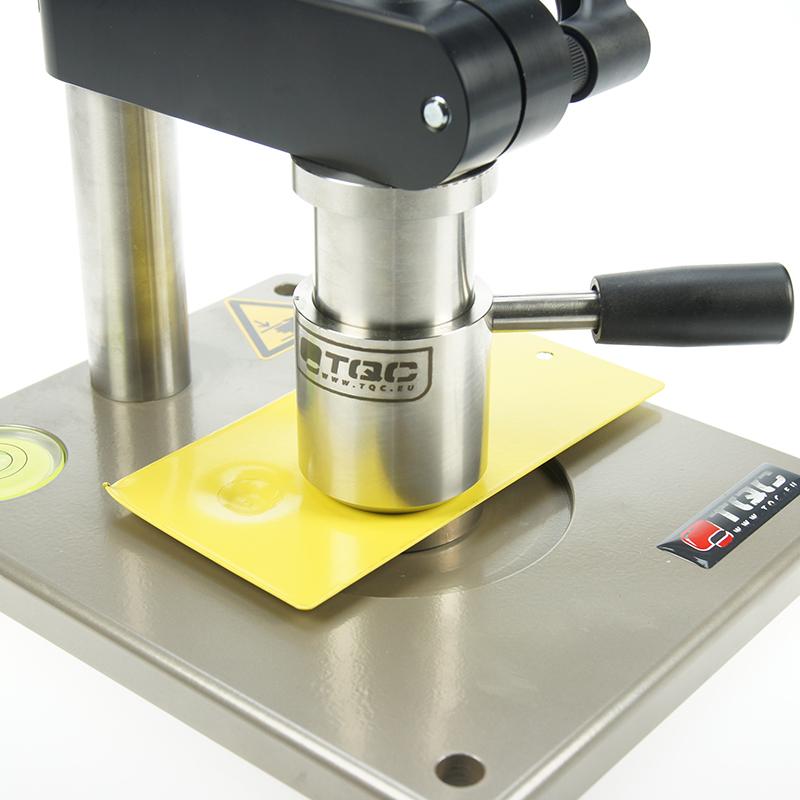
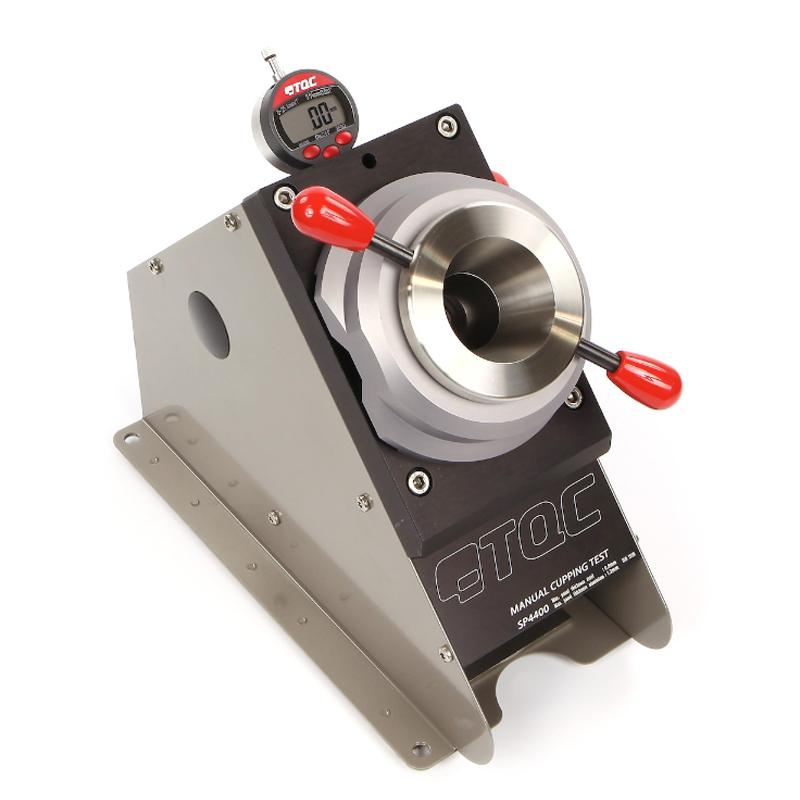
cupping test
Automatic Cupping Tester The cupping test is designed to test the elongation and deformation capabilities of paints and protective coatings applied to metal substrates. In this test, a coated metal sheet is gradually deformed by passing it through a polished die. This deformation is caused by the die pushing from underneath the coating, i.e. from the opposite side of the metal sheet. The endpoint is when the coating begins to crack.
The relevant test standards are:
ASTM E643 - 15: Standard Test Method for Deformation of Ball Punches in Sheet Metal
ASTM E643 testing covers the procedure for ball punch deflection testing of sheet metal for forming applications. The test is suitable for specimens between 0.008 and 0.080 inches (0.20 and 2.00 mm) thick. (This includes the Eriksson Test and the Olsen Cup Test).
ISO 1520:2006: Paints and varnishes — Cupping test (BS 3900-E4: Test methods for paints)
ISO 1520:2006 specifies an empirical test procedure for evaluating the resistance of a paint, varnish or related product coating to cracking and/or release from a metal substrate when gradually deformed by indentation under standard conditions.
Note: Tests were performed on relatively fresh coatings or freshly painted substrates, so it is important to note that coatings tend to lose flexibility over time due to chemical changes such as volatilization of plasticizers and crosslinking sex.
- 1Two Methods and Instruments of Film Flexibility Test
- 2Key performance and specific detection methods of resilience Coatings
- 3Key performance of powder coatings and their testing instruments
- 4How are architectural coatings flexibility tested?
- 5ASTM D5019 Single-layer roofing film reinforced CSM board (chlorosulfonated polyethylene (PE)) standard interpretation
- 6Analysis of Conical Mandrel Test of ASTM D522 Film
- 7Three methods for determining the flexibility of putty coatings
- 8Low/high Temperature Test Chamber for high-low temperature resistance test of foam materials
- 9Purpose, characteristics, operation steps and precautions of cone bending testing machine
-
![JINGKELIAN QTY-32-III Film Bending Tester cylindrical mandrel bending test machine, film flexibility]()
-
![JINGKELIAN QTY-32 cylindrical mandrel bending Tester to determine the ability of the paint film to deform with the substrate without damage]()
-
![TRUIT TR 5214 Bending Tester]() TRUIT TR 5214 Bending Tester$ 439.00
TRUIT TR 5214 Bending Tester$ 439.00 -
![MODERNER ZW-I Conical Mandrel Bending Tester - Elongation test of adhesive coatings for paints, varnishes, etc]()
-
![JINGKELIAN QTY-10A cylindrical mandrel bending Tester, eight different diameters cylindrical mandrel]()
-
![MODERNER WZJ-II Bending machine, testing equipment for measuring the bending resistance performance of color steel plates and Aluminum Panels]()