Lasting Adhesive Tester Principle Application Fault Detailed Explanation
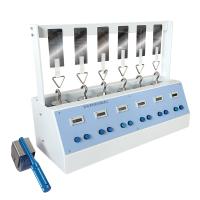
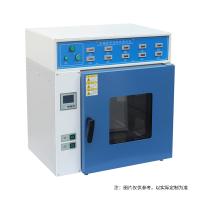
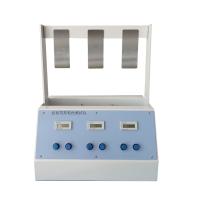
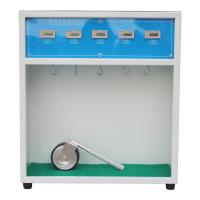
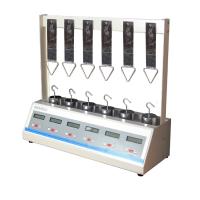
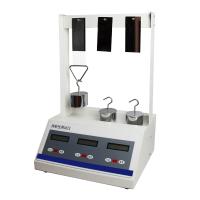
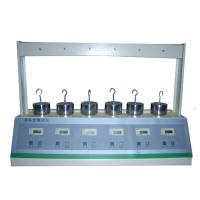
The tack tester is a precision testing instrument used to determine the viscosity of pressure-sensitive adhesive products (such as tapes, labels, protective films) under constant pressure and temperature, resisting shear forces, and quantifying their long-lasting adhesive performance by measuring the time it takes for samples to fall off after pasting.
type
Classification by temperature control
Room temperature type (room temperature ~50°C): suitable for basic testing in conventional environment, low cost.
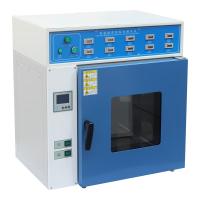
High and low temperature type (-40°C~150°C): with temperature control chamber, suitable for product testing (such as automobiles, outdoor products) used in extreme environments.
Classified by degree of automation
Manual type: manual timing, hanging weights, simple operation, suitable for small businesses or low-frequency testing.
Fully automatic type: automatic timing, data recording, alarm prompt, support multi-station simultaneous testing, high accuracy, suitable for scientific research or batch quality inspection.
Test principle
Based on the "gravity shear method": the sample is pasted between the test plate and the weight block according to the standard size, so that the sample is subjected to a constant shear load (applied by weights), and the vertical suspension is maintained at the specified temperature, and the time when the sample falls off the test plate (i.e., the adhesive holding time) is recorded, and the longer the time, the better the adhesion; If the set time is reached and does not fall off, it will be counted according to the set time.

Fields of application
Packaging industry - adhesive performance testing of tapes and self-adhesive labels to ensure the durability of packaging sealing.
Electronics industry - bonding stability testing of fixing tapes and protective films of electronic components.
Automotive industry - high and low temperature adhesive testing of body trim strips and wire harness fixing tapes.
Building materials industry - long-term adhesion performance evaluation of waterproof membranes and decorative films.
Stationery industry - testing of the adhesive effect of stationery tape and post-it notes.
Common faults and solutions
Samples fall off early or have an unusually short shedding time
Causes of failure: oil stains on the surface of the test board, uneven sample pasting, and weight deviation.
Solution: Clean the test plate with anhydrous ethanol and dry it; Bubble discharge and compaction samples according to standard techniques; Calibrate the weight weight.
inaccurate timing and large data deviation
Fault cause: The timer is not calibrated, the sample paste position is offset.
Solution: Calibrate the timer accuracy regularly; Make sure the sample is attached to the center of the test plate, aligned with the weight block.
The equipment is stuck and the load block is tilted during operation
Cause of failure: There is a foreign object in the guide rail, and the load block hook is worn.
Solution: Clean the impurities of the guide rail and lubricate it; Replace worn hook components.
summary
The adhesive tester is the core equipment for quality testing of pressure-sensitive adhesive products, which quantifies the long-lasting adhesive performance of products based on the gravity shear method, and is divided into normal temperature/high and low temperature, manual/fully automatic and other types, adapting to the testing needs of multiple industries. It is widely used in packaging, electronics and other fields, and is a key tool to ensure the reliability of product use. During use, it is necessary to pay attention to the cleaning of the test plate, the pasting of sample specifications and the regular calibration of the equipment, and deal with common faults such as lag and timing deviation in a timely manner, which can effectively ensure the accuracy and stability of the test data.