List of Coating Routine Testing Items and Testing Instruments
The routine testing of coatings is mainly divided into five major testing items: liquid performance testing, construction performance testing, optical performance testing, mechanical property testing and coating film resistance testing. In this issue, we will summarize the five routine tests of coatings, and make a brief introduction to the instruments used according to the test items.
1. Liquid performance testing of coatings
1. Transparency
The detection of transparency is mainly to detect the ability of products such as varnish, clear oil and paint to transmit light, mainly including visual method and standard liquid comparison method. Iron estimation Colorimeters and visual light boxes are commonly used in the industry to detect the transparency of coatings. The testing instruments recommended by the North and South Tides are as follows:
This iron Colorimeter contains 18 color levels, produced according to the GB/T1722 standard, and can determine the color of clear liquids of varnishes, clear oils and thinners. |  |
The light box contains five light sources: D65, TL84, CWF, F, UV, which can meet the daily use of colorimetric and color-matching environments. |

2. Color
Liquid color is mainly detected by colorimetric methods such as:Iron cobaltColorimetry, Rovipon colorimetry, Ga's colorimetry, platinum cobalt colorimetry, etc. The recommended instruments are the same as the transparency described above. Taking the iron-cobalt colorimetric method as an example, the sample to be tested is placed in a test tube, and the color scale of the iron-cobalt Colorimeter with similar contrast is viewed in the colorimetric light box for evaluation.
3. Density
The density of the sample needs to be measured by the mass per unit volume of liquid, i.e. the mass of the substance divided by the volume, at a specified temperature, expressed in g/ml units. Normally, stainless steel pycnometers are used, with a capacity of 20-100ml. Controlling the temperature by using a thermostatic Water Bath, analyzing the balance to accurately measure the quality, and how to use a pycnometer to measure the density of a liquid are many in the North and South Tides Knowledge Base, which will not be described in detail here.
The pycnometer recommended for measuring the density of liquids in the north and south tides is:
Netherlands TQC VF2099 Bibi Cup Stainless steel 100ml volume This stainless steel pycnometer has a volume of 100ml, is produced according to ISO2811, DIN53217 and ASTM D1475 standards, the sample is packed into a pycnometer, the temperature is kept in the range of 20°C, weighed by a balance, and the density is calculated using a density calculation formula. |

4. Fineness
In base coats and varnishes, the particle size and dispersion of pigments greatly affect the quality of the paint. The determination of fineness becomes particularly important. Typically, we use a scraper Fineness Meter to determine the fineness of the paint.
Netherlands TQC VF2110/2111/2112/2113 Double Groove Fineness Gauge Stainless Steel Accuracy ±2μm Due to the different fineness of different paints, the selection of a suitable scraper Fineness Meter can ensure the accuracy of the measurement. For more information on how to choose a scraper fineness gauge, it is recommended to read the article related to the North and South tides. As for whether to choose a double slot or a single slot, as a comparison in the same environment, there is no doubt that double slot is better, but it is also more expensive. The choice is up to the user. |

5. Viscosity
In CHINA, the viscosity of coatings is usually determined by coating -1 Viscosity Cups and coating -4 Viscosity Cups. Overseas companies also include the ISO Outflow Cup, the JIS Iwata Cup, and the Ford Cup. For example, the Tu-4 viscometer is suitable for measuring the viscosity of liquids with an outflow time of less than 150s. Tu-4 cup is a popular instrument for viscosity measurement of domestic products. However, if it is a product that is exported abroad, other Viscosity Cups, such as ISO outFlow Cups, are often considered.


Second, the coating construction performance test
The premise of the coating film construction performance test is the sample preparation of the coating film, and the drying time, hiding power, grinding ability, leveling sagging, flash point and thickness are measured through the prepared sample, and the thickness of the coating film is divided into two types: the thickness of the wet film state and the thickness of the dry film state. In addition, coating rate and porosity are also measurement indicators. The following is listed according to different test items and related instruments:
| Coating film preparer | Drying time | Coverage | Leveling sagging |
| Wet film wheels | Dry Film Thickness Gauge | Reflectance Tester | Wet film preparer |


3. Optical performance testing of coating film
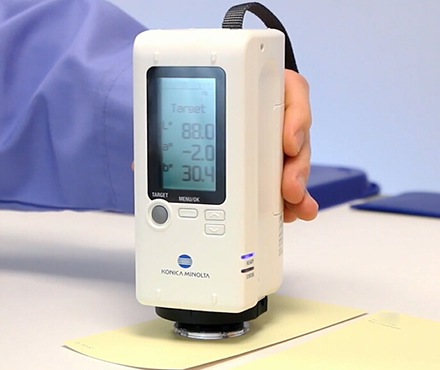
The optical performance test of the coating film is mainly the color inspection and mirror gloss detection of the appearance of the paint film. The former uses a color measuring instrument, while the latter mostly uses a gloss meter at different angles.
| Gloss meter | Colorimeter | Spectrophotometer |


Fourth, the mechanical properties of the coating film test
The mechanical testing of coating film is mainly divided into hardness, adhesion, wear resistance, impact and other tests. In this issue, we will introduce two common types: hardness testing and adhesion testing. Pencil Hardness Tester is commonly used as a testing instrument in CHINA, especially after the new standard comes out, it is more clear that the pencil Hardness Tester of 750g is used. The adhesion is tested by a scratcher. Similar to optical performance, three instruments are also recommended in this issue:
| Pencil Hardness Tester | Surface Hardness Tester | AdhesIon Meter |


5. Coating film resistance test
The resistance test subjects of the coating film are: water resistance test, salt water resistance test, acid and alkali resistance, solvent resistance, heat resistance, damp heat resistance, salt spray resistance, mold resistance, aging resistance and other tests. Since the experience of the North and South Tide in this category is not enough to give specific suggestions, the relevant knowledge about resistance testing can be retrieved from the knowledge base information of the North and South Tide, so I will not make suggestions here.
In the next issue, we will introduce the testing of various subdivided coatings in detail, so stay tuned.




- 1How to test architectural coatings workability?
- 2Coating mechanical performance test
- 3Coating liquid performance inspection -- paint and Varnish Density Determination
- 4Coating liquid performance inspection -- Varnish, oil and diluting agent Appearance and Transparency Determination
- 5Coating liquid performance inspection
- 6Coating general testing items and instrument classification [Full]
- 7Coating drying time and good painting interval [table]